What Is Riddim Bass?
Riddim is a subgenre of dubstep defined by its repetitive, minimal structure and heavy focus on bass design. Unlike the complex sound design of brostep or tearout, riddim relies on tight, punchy bass patterns that lock into the groove. Think artists like Virtual Riot, Subfiltronik, and Infekt.
The key to great riddim production is nailing the bass sound. And for that, Xfer Serum is the go-to synthesiser for almost every riddim producer working today. In this guide, we will walk through how to build riddim basses from scratch in Serum.
Setting Up Your Riddim Project
Before you start designing sounds, get your project template right. Set your DAW tempo to 140-150 BPM (most riddim sits around 140). Whether you use Ableton Live, FL Studio, or any other DAW, the workflow in Serum stays the same.
Create a bass channel, load Serum, and make sure your monitoring setup can handle low frequencies. Good headphones or studio monitors with decent sub response are essential for this genre.
The Basic Riddim Bass Patch
Start with Oscillator A. Load a basic saw or square wavetable. This will be the foundation of your riddim bass. Set the voicing to mono with a short glide time (around 20-40ms) for those signature pitch slides between notes.
Turn on Oscillator B and load a different wavetable. Try something with more harmonic content like Analog_BD_Sin or one of the digital wavetables. Detune it slightly from Oscillator A to create thickness.
Adding Distortion and Character
Riddim bass lives and dies by its distortion. In Serum, head to the FX tab and add a distortion effect. Start with the Diode or Hard Clip modes. Push the drive until the bass starts to get that aggressive, clipped character.
Layer a second distortion after the first one, using a different mode like Tube or Warm. Stacking distortion types creates more complex harmonics than just cranking one distortion up.
Advanced Riddim Bass Techniques in Serum
Wavetable Position Modulation
This is where riddim bass gets interesting. Assign an LFO to the wavetable position of Oscillator A. Set the LFO to a slow rate, synced to your project tempo. As the wavetable position changes, the timbre of the bass shifts, creating movement in the sound.
Try different LFO shapes. A triangle wave gives smooth sweeps, while a square wave creates stuttered, rhythmic changes. This is the secret behind many of those iconic riddim bass movements.
Using the Noise Oscillator
Do not sleep on the noise oscillator in Serum. Adding a touch of noise to your riddim bass gives it grit and presence in the mix. Load a noise sample like BrightWhite or Pink, and use a bandpass filter on the noise to focus it in the mid-high range. Keep the level low, just enough to add texture without overpowering the bass.
Formant Filtering for Vowel Sounds
Many riddim basses use formant-style filtering to create those talking or yoi bass sounds. In Serum, use the filter section with the French LP or German LP filter types. Automate the cutoff with an LFO or envelope to sweep through vowel-like sounds.
You can also use multiple filter types in series. Serum allows two filters, so use Filter 1 as a formant-style filter and Filter 2 as a low pass to control the overall brightness.
Processing Your Riddim Bass
The OTT Compression Trick
OTT (Over The Top compression) is practically mandatory in riddim production. It is a multiband upward compressor that brings out all the detail in your bass. In Ableton, use the built-in OTT preset. In FL Studio, use Maximus or the free OTT plugin from Xfer.
Place OTT after your Serum instance but before any EQ. Start with the depth at around 30-40% and adjust to taste. Too much OTT can make your bass sound thin, so find the sweet spot.
EQ and Mixing Tips for Riddim
Cut everything below 30Hz to keep your sub clean. Add a slight boost around 80-100Hz for weight. Cut any harsh frequencies around 2-4kHz if the distortion gets too aggressive. Boost slightly around 6-8kHz for presence and clarity in the mix.
Sidechain your bass to the kick drum. In riddim, the kick and bass need to work together tightly. Use a short sidechain with a fast release to keep the groove punchy.
Speed Up Your Workflow with Preset Packs
Learning to design your own riddim basses from scratch is invaluable. But having a library of high-quality presets as starting points can speed up your workflow massively. Preset packs give you professionally designed sounds that you can then tweak, layer, and make your own.
Our Dirty Drum and Bass Vol.1 and Vol.2 Serum preset packs include aggressive bass patches that work perfectly for riddim and heavier dubstep styles. Each preset is fully macro-mapped so you can shape and customise every sound to fit your track.
Key Takeaways
Keep your riddim basses mono below 200Hz and spread the higher harmonics in stereo for width. Use reference tracks from artists you admire and A/B your bass sounds against them regularly. Stack multiple distortion types rather than just cranking one. And most importantly, experiment with wavetable modulation and filter automation because the best riddim basses often come from pushing Serum beyond its obvious settings.
PHP: 2026-03-08 20:22:20 [notice X 0][/var/www/presetdrive/wp-content/plugins/elementor-pro/modules/forms/submissions/actions/save-to-database.php::193] {closure:ElementorPro\Modules\Forms\Submissions\Actions\Save_To_Database::__construct():193}(): Implicitly marking parameter $exception as nullable is deprecated, the explicit nullable type must be used instead [array (
‘trace’ => ‘
#0: Elementor\Core\Logger\Manager -> shutdown()
‘,
)]
Related Guides
Explore more bass sound design tutorials:
- How to Make Tearout Dubstep Bass in Serum
- Brostep Sound Design in Serum
- How to Make Deathstep Bass in Serum
- OTT Compression for Bass Music Explained
- Drum and Bass Subgenres Explained
Ready to level up your sound?
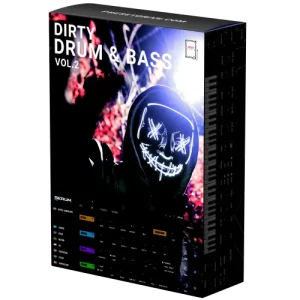
Dirty Drum & Bass Vol.2
Filthy bass presets for dubstep and riddim. Growls, wobbles, and screeches.
£29.99
Shop Now →Not sure yet? Grab our free taster pack first.


