Bass house has carved out a massive space in electronic music over the last few years. It sits at the intersection of UK garage, house music, and bass music, taking the groove and swing of house and injecting it with the low-end weight of dubstep and DnB. Artists like Jauz, Habstrakt, Chris Lorenzo, and Skepsis have brought the sound to festival main stages worldwide, and it shows no sign of slowing down.
If you’ve been wanting to produce bass house but aren’t sure where to start, this guide walks you through the entire process. We’ll cover the defining elements of the genre, bass sound design in Serum, drum programming, arrangement, mixing, and how to take your tracks from bedroom demos to club-ready productions.
Defining the Bass House Sound
Before you start producing, it helps to understand what makes bass house its own thing. The genre sits in a sweet spot between several styles, and knowing its DNA helps you make informed production decisions.
Key characteristics of bass house:
- Tempo: Typically 125-130 BPM, though some tracks push up to 135 BPM or drop as low as 120 BPM. The sweet spot for most bass house is around 128 BPM.
- Time signature: Standard 4/4 with a strong emphasis on the downbeat
- Kick pattern: Four-on-the-floor (kick on every beat), inherited from house music. This is the rhythmic foundation that separates bass house from dubstep or DnB.
- Bass character: Heavy, filtered bass sounds that move and morph. Think thick square waves, FM bass stabs, and filtered wobbles. The bass is always prominent in the mix but never overpowers the groove.
- Groove: Shuffled hi-hats and swung percussion give bass house its bouncy, head-nodding quality. This is the UK garage influence showing through.
- Vocal elements: Chopped vocal snippets, pitched-up phrases, and processed vocal hits are a staple. Full vocal hooks are less common than in mainstream house, but they appear occasionally.
- Structure: Drop-based arrangement similar to EDM, but with shorter breakdowns and less melodic build-ups than progressive house or trance
The influences behind bass house include UK garage (the groove and vocal chops), dubstep (the heavy bass and drop-based structure), house music (the four-on-the-floor kick pattern), and grime (the aggressive energy). Understanding these roots helps you blend elements authentically rather than just copying surface-level sounds.
Essential Elements of a Bass House Track
Let’s break down the components that make up a bass house production:
Punchy Kicks
The kick is the heartbeat of bass house. It needs to be punchy enough to cut through the heavy bass while still feeling round and weighty. Unlike DnB or dubstep kicks, which often have a lot of sub-bass content, bass house kicks tend to be tighter and punchier, with their weight concentrated around 50-80Hz.
What to look for in a bass house kick:
- A short, tight transient that cuts through the mix
- Weight in the 50-80Hz range rather than below 40Hz
- Minimal decay. Bass house kicks are punchy, not boomy.
- Some high-frequency click around 3-5kHz for presence
Many producers layer two or three samples to create their kick: a sub layer for weight, a mid layer for body, and a transient click for attack. This gives you control over each element independently.
Filtered Bass
The bass sound is what defines bass house. It’s typically a thick, harmonically rich sound that’s shaped by filter movement. Classic bass house bass tones include:
- Filtered square waves with resonant low-pass sweeps
- FM bass stabs with metallic character
- Reese-style bass with heavy detuning and filter modulation
- Distorted bass with band-pass filtering for vowel-like movement
The key word here is “filtered.” Nearly every bass house bass sound involves some form of filter modulation, whether it’s a slow sweep, a rhythmic pulse, or an envelope-triggered movement. This filter action is what gives bass house its characteristic “wub” and “wah” sounds.
Vocal Chops
Chopped and processed vocals are a signature element of bass house. They add a human element to the otherwise synthetic sound palette and create memorable hooks without needing a full vocal performance.
Common vocal chop techniques include pitching phrases up or down and chopping into rhythmic patterns, time-stretching for glitchy stuttering effects, running vocals through vocoders, using single syllables as rhythmic hits, and layering processed chops with synth stabs for hybrid textures.
Percussion
Beyond the kick, bass house percussion includes claps and snares on beats 2 and 4, swung hi-hats for bounce, rides and crashes for energy and transitions, and shakers or tambourines for added texture and groove.
Bass Sound Design in Serum
Serum is the go-to synth for bass house production. Its wavetable engine, flexible modulation, and built-in effects make it perfect for creating the filtered, evolving bass sounds the genre demands. Here are some core bass house sound design techniques in Serum:
The Classic Filtered Square Bass
This is the bread and butter of bass house. Here’s how to build one from scratch:
- Load a square wave on OSC A (from the “Basic Shapes” wavetable, set the position to the square wave)
- Add 2-4 unison voices with light detune for thickness
- Enable Filter 1, set to a low-pass filter (LPF 24 or MG Low 24)
- Set the filter cutoff relatively low and add moderate resonance (around 30-40%)
- Assign an LFO to the filter cutoff with a synced rate (1/4 or 1/2 note)
- Alternatively, assign an envelope to the filter cutoff for sounds that open up on each note trigger
- Add some distortion in the effects tab for grit
- Activate the sub oscillator with a sine wave for clean low-end weight
The magic is in the filter modulation. Experiment with different LFO shapes and rates to find the movement that works for your track. Custom LFO shapes can create unique rhythmic patterns that give your bass a distinctive character.
FM Bass Stabs
FM bass stabs are punchy, metallic hits that work perfectly for bass house’s staccato rhythms:
- Set OSC A to a sine wave
- Set OSC B to a sine wave, tuned up 1-2 octaves
- Enable FM modulation from B to A
- Use an envelope (not an LFO) to control the FM amount, with a fast attack and medium decay
- This creates a sound that starts bright and metallic, then decays to a simpler tone
- Add a short amplitude envelope with a fast decay and no sustain for stab-like hits
- Layer with a sine sub for low-end support
Growling Bass
For more aggressive bass house tracks, a growling bass adds energy:
- Choose a complex wavetable from the “Digital” or “Spectral” folder
- Modulate the wavetable position with a fast LFO (1/8 or 1/16 note)
- Run through a band-pass filter with the cutoff modulated by another LFO at a different rate
- Add distortion and saturation for aggression
- High-pass around 100Hz and layer with a separate sub bass
If you’d rather start with professionally designed bass house sounds and learn by tweaking them, our bass house Serum preset collection has a range of filtered basses, FM stabs, and growls ready to drop into your projects.
Drum Programming Patterns
The drum pattern is what makes bass house groove. Getting this right is just as important as the bass sound design. Here’s a breakdown of the typical bass house drum pattern:
The Basic Pattern
- Kick: Every beat (1, 2, 3, 4). This is non-negotiable in bass house. The four-on-the-floor kick defines the genre.
- Clap/Snare: Beats 2 and 4. Sometimes with ghost hits on the off-beats for more complex grooves.
- Hi-hats: Eighth notes or sixteenth notes, often with swing/shuffle applied. Open hats on off-beats add energy.
- Percussion: Shakers, rides, or additional percussion elements fill in the gaps and add texture.
Adding Groove and Swing
What separates a stiff, mechanical drum pattern from a proper bass house groove is swing. Most DAWs have a swing or groove control that shifts off-beat notes slightly ahead of or behind the grid. For bass house, a swing amount of 55-62% (where 50% is perfectly straight) creates that characteristic bounce.
Alternatively, programme your hi-hats and percussion slightly off-grid manually for a more natural, human feel. Listen to how Chris Lorenzo or Skepsis programme their drums. Velocity variation is also crucial. Alternate between loud and soft hits, accent the off-beats, and create dynamic patterns that breathe.
Ghost notes (very quiet hits between the main beats) add subtle complexity. Try adding quiet snare or hat hits on the 16th note subdivisions. Drum fills should be short and punchy. A quick snare roll or hat flurry leading into a new section works better than long, build-up style fills.
Arrangement Structure
Bass house arrangement follows a fairly standard structure, but knowing the conventions helps you make your tracks feel complete and professional.
A typical bass house arrangement:
- Intro (16-32 bars): Stripped-back groove with kick, hats, and minimal elements. This section is for DJs to mix into, so keep it simple and rhythmic. Maybe introduce a filtered version of the bass or a vocal element to hint at what’s coming.
- Build-up (8-16 bars): Energy increases. Add risers, filter sweeps, snare rolls, and vocal snippets. Remove the kick in the last 4-8 bars to create tension before the drop.
- Drop 1 (16-32 bars): The main event. Full bass, full drums, all the energy. This is where your bass sound design and drum programming shine. 16 bars is the minimum, but 32 bars gives you room to develop the idea.
- Breakdown (8-16 bars): Pull back the energy. Remove or filter the bass, strip back the drums, introduce a melodic or vocal element. This gives the listener’s ears a rest before the second drop.
- Build-up 2 (8-16 bars): Similar to the first build, but you can vary it. Maybe a different riser, a new vocal chop, or a different rhythmic build.
- Drop 2 (16-32 bars): The second drop should deliver at least as much energy as the first, ideally more. Introduce a new bass sound, a different pattern, additional layers, or a variation on the main bass riff.
- Outro (16-32 bars): Mirror the intro structure so DJs can mix out cleanly. Gradually strip elements away, returning to a minimal kick-and-hat groove.
Total track length is typically 3-5 minutes. One important tip: don’t save everything for the drop. Tease elements throughout the intro and build-up to create anticipation.
Processing and Mixing Bass House
Mixing bass house shares many principles with mixing other bass-heavy genres, but there are some genre-specific considerations.
Kick and Bass Relationship
This is the most critical mixing decision in bass house. The kick and bass need to coexist without fighting, and because the four-on-the-floor kick hits on every beat, sidechain compression is essentially mandatory.
A relatively short sidechain ducking works best. A volume shaping plugin with a fast release (around 1/8 or 1/16 note) keeps the groove tight. Some producers use frequency-specific sidechaining, ducking only the sub frequencies while leaving the mid-range untouched.
Bass Processing Chain
A typical chain: EQ (high-pass at 30-40Hz, cut mud at 200-300Hz), saturation for harmonics and presence, gentle compression (3:1, medium attack), sidechain ducking from the kick, and a limiter to catch peaks.
Vocal Processing and Stereo Width
Vocal chops need to cut through the dense bass without adding clutter. High-pass aggressively (200-400Hz), compress heavily for consistency, and add only short reverb or delay. For stereo width, keep the kick and bass mono and centred while using panning and widening on hi-hats, percussion, and vocal chops. Always check your mix in mono to catch phase issues.
Reference Tracks and Artists
Studying reference tracks is one of the fastest ways to improve your bass house productions. Here are some key artists and tracks worth analysing:
- Jauz: One of the pioneers. Incredibly clean mixes with powerful, filtered bass sounds.
- Habstrakt: Creative bass sound design and tight, punchy drums. A masterclass in the filtered square bass sound.
- Chris Lorenzo: Perhaps the best example of groove in bass house. Impeccable drum programming with natural swing.
- Skepsis: UK bassline influence. Heavier and more aggressive, with complex bass patterns.
- Wax Motif: Clean production with a deeper, moodier take on the genre.
When referencing, focus on specific elements: how loud is the kick relative to the bass? How wide are the hi-hats? What frequency range does the bass occupy? Breaking it down gives you actionable information.
From Bedroom to Club-Ready
There’s a noticeable gap between a bass house track that sounds good on headphones and one that works on a club system. Here’s how to bridge that gap:
Low End Control
Club systems reproduce sub frequencies far more powerfully than headphones or bedroom monitors. What sounds like a moderate amount of sub on your headphones might be overwhelming on a club PA. Use a spectrum analyser to check that your sub isn’t disproportionately loud, and reference against commercial tracks at matched loudness.
Transient Clarity
In a club environment, transients need to be crisp and defined to cut through the reverberant space. Make sure your kick attacks, snare cracks, and vocal chops have strong, clean transients. Transient shaper plugins can help if your sounds feel soft.
Dynamic Range and DJ-Friendly Arrangement
Avoid over-compressing. Leave dynamic range so drops feel impactful against the breakdowns. For DJ playability, include clean 16-bar kick-and-hat grooves at the start and end of your track.
Mastering Considerations
Bass house masters tend to be loud but not crushed. Target around -6 to -8 LUFS for streaming platforms, and leave headroom if submitting to labels. Focus on subtle EQ, gentle limiting, and checking on multiple systems.
Common Mistakes in Bass House Production
Avoid these pitfalls that trip up many bass house producers:
- Making the bass too complex: A filtered square wave with good modulation is often more effective than an over-designed FM monster.
- Neglecting the groove: If your drums don’t make people nod their heads, no amount of bass sound design will save the track.
- Forgetting about the sub: Every bass house track needs a solid, clean sub foundation.
- Too much reverb: Bass house is a relatively dry genre. Keep reverbs short and filtered.
- Skipping the arrangement: A great 8-bar loop does not make a track. Build tension and make the drops feel earned.
- Ignoring the low-pass filter: Learn to use it creatively and musically, not just as a corrective measure.
Getting Started: Your First Bass House Track
If this all feels overwhelming, here’s a simplified workflow to get your first bass house track started:
- Set your tempo to 128 BPM
- Programme a basic four-on-the-floor kick pattern
- Add claps on beats 2 and 4
- Programme swung hi-hats in sixteenth notes
- Design a simple filtered square bass in Serum (follow the steps outlined earlier)
- Write a 4-bar bass pattern that works with the drum groove
- Add a vocal chop or synth stab for a hook
- Arrange into intro, build, drop, breakdown, build, drop, outro
- Mix, reference, and refine
Don’t try to make your first track perfect. The goal is to finish it and learn from the process. Every track you complete teaches you something that no tutorial can.
For a head start on your productions, our bass house Serum presets give you professionally designed sounds that you can use as-is or tweak to fit your style. You can also grab our preset giveaway to test the quality before committing. And if you’re producing across multiple bass genres, the full Serum preset collection at Preset Drive covers everything from DnB to dubstep to bass house and beyond. Good luck with your productions.
Related Preset Packs
Looking for professional bass music presets? Check out these Serum preset packs:
PHP: 2026-03-15 12:33:51 [notice X 0][/var/www/presetdrive/wp-content/plugins/elementor-pro/modules/forms/submissions/actions/save-to-database.php::193] {closure:ElementorPro\Modules\Forms\Submissions\Actions\Save_To_Database::__construct():193}(): Implicitly marking parameter $exception as nullable is deprecated, the explicit nullable type must be used instead [array (
‘trace’ => ‘
#0: Elementor\Core\Logger\Manager -> shutdown()
‘,
)]
For a complete overview of bass house sounds and preset recommendations, see our Bass House Serum Presets guide.
Get sounds that already sit in the mix
Skip the sound design. Our Serum packs and one-shots load straight into your DAW so you can finish a track tonight.
Ready to level up your sound?
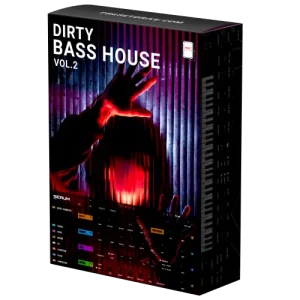
Dirty Bass House Vol.2
Punchy bass house presets built for heavy drops and groovy basslines.
£29.99
Shop Now →New here? Start with our one-shots pack first.

