What Makes Neurofunk Bass So Distinctive
Neurofunk is the most technically demanding subgenre of bass music when it comes to sound design. The bass sounds in neurofunk are complex, aggressive, and constantly evolving. They morph between different timbres, they snarl and scream, and they are the centrepiece of every track. If you can design neurofunk bass, you can design anything.
The sounds that define neurofunk typically feature heavy distortion, complex modulation, and extensive resampling. They often sound like angry robots or mangled machinery. Creating them in Serum requires a combination of wavetable selection, aggressive processing, and precise modulation routing.
Starting Your Neurofunk Bass Patch
Wavetable Selection
Choose wavetables with complex harmonic content. The Spectral, Digital, and Distortion categories in Serum are your best friends for neurofunk. Look for wavetables that have dramatic tonal variation across their frames, because you will be modulating the wavetable position for tonal movement.
Load a complex wavetable in Oscillator A and set the unison to 2-4 voices with moderate detune (0.05-0.10). You do not want huge stereo spread on your neurofunk bass. You want it focused and aggressive, sitting in the centre of the mix with just enough width to feel present.
Oscillator B for Harmonic Complexity
Add a second wavetable in Oscillator B from a different category. Detune it slightly from Oscillator A (a few cents up or down) to create beating and interference patterns. Set the levels so Oscillator B adds harmonic texture without overwhelming Oscillator A.
Try setting Oscillator B to a different octave and blending it in at a lower volume. The interaction between two wavetables at different pitches creates the complex harmonic content that defines neurofunk bass.
Aggressive Filter and Distortion Setup
Multi-Mode Filtering
Neurofunk bass often uses multiple filter stages. Set up Filter 1 as a bandpass filter with moderate resonance (30-50%). This focuses the sound in the mid-range where neurofunk bass is most aggressive. Modulate the filter cutoff with an LFO for tonal movement.
Route your signal through the filter and then into Serum FX rack for additional processing. The filter shapes the raw oscillator sound before distortion, which gives more musical results for this style.
Layered Distortion
Neurofunk requires heavy distortion, but smart distortion. Use multiple distortion stages with different character rather than one stage cranked to maximum. In the FX rack, try a Warm Tube distortion at moderate drive followed by a separate distortion module set to Diode or Hard Clip with lower drive.
Each distortion stage adds different harmonic content. Tube distortion adds warm even harmonics. Hard clipping adds aggressive odd harmonics. Combining them creates the complex, rich distortion character that neurofunk is known for.
Advanced Modulation for Movement
LFO Routing
The key to neurofunk bass is constant tonal movement. Assign LFO 1 to filter cutoff for the main movement pattern. Assign LFO 2 to wavetable position on Oscillator A for tonal evolution. Assign LFO 3 to wavetable position on Oscillator B at a different rate for cross-modulation between the two oscillators.
Use different LFO rates for each assignment. If LFO 1 is synced to 1/4 notes, try LFO 2 at 1/3 notes and LFO 3 at 1/6 notes. The different rates create polyrhythmic modulation patterns that never exactly repeat, keeping the sound constantly evolving.
Envelope Followers and Velocity
Map velocity to filter cutoff and distortion drive so the bass responds to how hard you play. Harder notes should open the filter more and drive the distortion harder for aggressive accents. Softer notes should stay darker and more subdued. This dynamic response makes the bass feel alive and playable rather than static.
Resampling for Extra Complexity
Many neurofunk producers resample their bass sounds multiple times. Record the output of your Serum patch, import it back as a wavetable or audio sample, and process it again. Each round of resampling adds layers of complexity and character. Some of the most iconic neurofunk bass sounds have been through 3-5 rounds of resampling.
After resampling, chop up the audio and rearrange the most interesting moments into new patterns. Combine sections from different parts of your recording for maximum tonal variety within a single bass line. Check out our neurofunk-focused preset packs for professional examples of these techniques.
Master Neurofunk Sound Design
Neurofunk bass design is a deep rabbit hole that rewards obsessive experimentation. Start with the techniques in this guide, then push further. Try weirder wavetables, more extreme modulation routings, and heavier processing chains. The best neurofunk sounds come from pushing boundaries and finding happy accidents.
Get started with our Serum taster pack and use the included bass presets as starting points for your neurofunk experiments. Add distortion, modulation, and processing to transform them into something completely new and aggressive.
‘trace’ => ‘
#0: Elementor\Core\Logger\Manager -> shutdown()
‘,
)]
For a complete overview of neuro bass sounds and preset recommendations, see our Neuro Bass Serum Presets guide.
Get sounds that already sit in the mix
Skip the sound design. Our Serum packs and one-shots load straight into your DAW so you can finish a track tonight.
Ready to level up your sound?
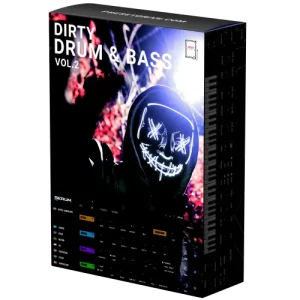
Dirty Drum & Bass Vol.2
Complex neuro bass presets with heavy modulation and processing.
£29.99
Shop Now →New here? Start with our one-shots pack first.

