Planning Your DnB Track
Building a drum and bass track from scratch can feel overwhelming if you just stare at an empty DAW project. The key is breaking the process down into manageable stages and tackling them one at a time. By the end of this guide, you will have a clear roadmap for creating a complete DnB track from that first kick drum to the final master.
Before you start placing sounds, make three decisions. What subgenre are you making (liquid, jump up, neurofunk, minimal, halftime)? What key and BPM are you working in? And what is the general vibe or emotion you want to convey? These decisions guide every choice that follows. For this guide, we will work through a general DnB template at 174 BPM in the key of F minor.
Building the Drum Foundation
Kick and Snare
Start with your kick and snare. These two elements define the energy and character of your track. Place the kick on beats 1 and 3 (or just beat 1 for a more minimal feel). Place the snare on beats 2 and 4. This gives you the basic DnB two-step rhythm.
Choose a kick with a tight low end (fundamental around 50-70Hz) and a clear click transient. The snare should be crisp with a sharp attack. Layer an acoustic snare sample with a synthetic click if needed. Process both lightly at this stage. Focus on getting the core rhythm feeling good before adding effects.
Hi-Hats and Percussion
Add closed hi-hats at 8th or 16th notes with velocity variation. The velocity pattern creates the groove. Emphasize the off-beats slightly for a driving feel. Add an open hat on every other off-beat for accent. Introduce a ride cymbal playing straight 8th notes at a lower volume for a constant rhythmic bed.
Layer in percussion elements like shakers, tambourines, or clicks. Keep these subtle and use them to fill rhythmic gaps and add texture. Pan some percussion slightly left and right for stereo width in the drum pattern. Spend time on this stage because the drum groove is the foundation everything else sits on.
Creating the Bass
Sub Bass Layer
Open Serum and create a clean sub bass. Load a sine wave, set the amp envelope to a medium attack (5-10ms), long sustain, and medium release. Program a simple bass pattern in F minor. The sub should mostly play root notes (F) with occasional movement to other notes in the scale.
Keep the sub mono and clean. No effects, no modulation, no unison. The sub bass has one job, providing low-end weight. Process it with a low-pass filter at around 120Hz to remove any harmonics that might interfere with the mid-range elements you add later.
Mid Bass Layer
Create a second Serum instance for the mid bass. This is where you get creative. Load a wavetable, add 2-4 unison voices, apply filtering and modulation. The mid bass carries the character and movement of your bass sound. For a reese-style mid bass, use two detuned saw waves with LFO modulation on the filter cutoff.
High-pass the mid bass at 80-100Hz so it sits above the sub. Apply sidechain compression from the kick to both bass layers. The mid bass can be wider than the sub, using subtle stereo spread to fill the mix without compromising mono compatibility in the lows.
Adding Melodic Elements
Pads
Create an atmospheric pad to fill the harmonic space. Use Serum with a saw or triangle wave, lots of unison, and heavy reverb. Play a simple chord progression in F minor. Two or four chords across 8 bars is plenty. The pad should be felt more than heard, providing emotional context without competing with the bass.
Filter the pad gently with a low-pass to keep it smooth. Add slow LFO modulation for movement. Place the pad relatively low in the mix. It is the background, not the foreground.
Leads and Melodies
Write a simple melody using notes from the F minor scale. Keep it to 4-8 notes maximum. In DnB, melodies work best when they are memorable and simple rather than complex and busy. The fast tempo means notes fly past quickly, so simpler phrases are easier for the listener to grasp.
Process your lead with some delay and reverb for space. EQ out any frequencies that clash with the bass (typically below 200Hz). The lead should sit above the bass in the frequency spectrum, occupying the 1-5kHz range primarily.
Arrangement Structure
A standard DnB arrangement looks something like this. Intro (16-32 bars) with drums building gradually. Main section A (32 bars) with full drums, bass, and some melodic elements. Breakdown (16 bars) stripping back to pads and atmosphere. Build (8 bars) reintroducing drums and rising tension. Main section B (32 bars) with full energy and possibly new elements. Outro (16 bars) winding down.
Do not introduce all elements at once. Bring them in one at a time over the first 16-32 bars. This creates a sense of development and keeps the listener engaged. Each new element should feel like it adds something essential to the track.
Transitions
Use risers, impacts, and filter sweeps to smooth transitions between sections. A simple noise riser over 8 bars before a drop works every time. A reverse cymbal crash signals a transition. A filter sweep on the drums (automating a high-pass upward) creates tension before a breakdown.
Mixing and Finishing
Once your arrangement is complete, focus on the mix. Balance levels so the kick and snare are the loudest elements. The bass should be felt more than heard. Pads and atmosphere sit behind everything else. Use EQ to carve out space for each element. Compress the drum bus for cohesion. Sidechain the bass against the kick.
Check your mix on headphones and monitors. Reference against professional DnB tracks to check your tonal balance and loudness. Make small adjustments, not drastic changes. If the track does not feel right at this stage, the problem is usually in the arrangement or sound selection rather than the mix.
Start Building Your Track Today
Building a DnB track from scratch is a process that gets easier with practice. Follow these stages in order, make decisive creative choices, and do not get stuck perfecting one element before moving on to the next. Finish the track first, then go back and refine.
Quality sounds make every stage easier. Start with the Serum Taster Pack for professional bass and pad presets. Then explore the Preset Drive shop for complete sound palettes that give you everything you need to build DnB tracks that stand up alongside the pros.
PHP: 2026-03-15 12:34:48 [notice X 0][/var/www/presetdrive/wp-content/plugins/elementor-pro/modules/forms/submissions/actions/save-to-database.php::193] {closure:ElementorPro\Modules\Forms\Submissions\Actions\Save_To_Database::__construct():193}(): Implicitly marking parameter $exception as nullable is deprecated, the explicit nullable type must be used instead [array (
‘trace’ => ‘
#0: Elementor\Core\Logger\Manager -> shutdown()
‘,
)]
For a complete overview of modern drum and bass production and preset recommendations, see our Modern Drum and Bass Serum Presets guide.
Get sounds that already sit in the mix
Skip the sound design. Our Serum packs and one-shots load straight into your DAW so you can finish a track tonight.
Ready to level up your sound?
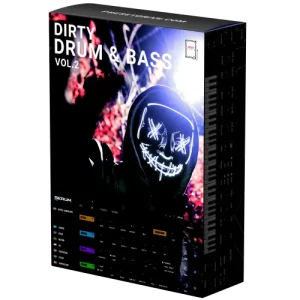
Dirty Drum & Bass Vol.2
Professional DnB presets for Serum. Reeses, neuro basses, subs, and more.
£29.99
Shop Now →New here? Start with our one-shots pack first.

