Why Music Theory Matters for Bass Music
A lot of bass music producers skip music theory because they think it is only for classical musicians or jazz players. That is a mistake. You do not need a degree in music, but understanding the basics will make you a faster, more effective producer. Theory gives you the vocabulary to understand why certain things sound good and helps you recreate those moments intentionally instead of stumbling into them by accident.
Bass music might seem like it is all about sound design, but the notes you choose, the scales you write in, and the way your melodies interact with your bass all make a huge difference to how your track feels. Knowing even a little theory puts you ahead of most producers in the scene.
Scales and Keys for Bass Music
Most bass music lives in minor keys. The dark, heavy, tense feeling of dubstep, drum and bass, and riddim comes from minor scales. The two most useful scales to know are natural minor and harmonic minor.
Natural Minor
This is your bread and butter. The pattern is whole, half, whole, whole, half, whole, whole (W-H-W-W-H-W-W). In the key of A minor, that gives you A, B, C, D, E, F, G. No sharps or flats, which makes A minor a popular key for producers just starting out with theory.
Natural minor has a dark but smooth quality. It is perfect for atmospheric DnB, deep dubstep, and liquid styles where you want darkness without too much tension.
Harmonic Minor
Take the natural minor scale and raise the 7th note by one semitone. In A harmonic minor, that turns the G into a G#. This creates a distinctive interval between the 6th and 7th notes that sounds exotic and tense. You hear this scale all over heavy dubstep, riddim, and Middle Eastern influenced bass music.
Choosing Your Key
For bass-heavy music, lower keys work best. E, F, G, and A in the first or second octave give you deep, powerful sub bass. Going too low (C1 or below) can cause problems because the frequencies become hard to reproduce on most speaker systems. The sweet spot for sub bass is usually E1 to A1.
Chords That Work in Bass Music
You do not need complex jazz chords to write great bass music. Simple minor chords, power chords (root and fifth), and suspended chords cover most of what you need.
Minor triads (root, minor third, fifth) are the foundation. In A minor, that is A, C, E. These chords sound dark and stable. For more tension, try minor seventh chords (add a G on top of the A minor triad). The seventh adds a moody, unresolved quality that works brilliantly in atmospheric sections.
Chord Progressions
Some classic progressions that work well in bass music include i – VI – III – VII (in A minor: Am, F, C, G). This is probably the most common progression in electronic music. It moves and resolves in a satisfying way without being overly complex.
Another solid option is i – iv – v (Am, Dm, Em). This three-chord progression is simple but effective, especially for driving, energetic sections. The movement from minor to minor creates a dark, forward momentum.
For breakdowns and atmospheric parts, try sustained single chords with added notes. Hold an Am chord and slowly introduce the 7th, 9th, or 11th to create evolving, cinematic textures.
Bass Notes and Root Movement
Your sub bass should almost always play root notes of whatever chord is happening above it. Playing the root keeps things solid and anchored. When bass music producers talk about a track sounding tight, they usually mean the sub is locked to the root notes.
Occasionally, playing the fifth in the bass can work for transitions or passing notes. But thirds in the bass tend to sound muddy and unclear because of how low frequencies interact. Stick to roots and fifths in the sub range, and save the more interesting note choices for your mid-range elements.
Intervals for Melody
When writing melodies or leads over your bass, certain intervals create specific feelings. Minor seconds (one semitone apart) create extreme tension and dissonance. Perfect fourths and fifths sound open and powerful. Minor thirds sound dark and emotional. Use these intervals intentionally to set the mood of your track.
Rhythm and Time Signatures
Most bass music is in 4/4 time, but what you do within that framework matters. Understanding note divisions helps you program more interesting rhythms. Straight 16th notes give you a mechanical, driving feel. Triplets create a swing or shuffle. Dotted notes create syncopation and groove.
Drum and bass at 170-180 BPM often uses half-time feel for the drums while the bass plays at full tempo, creating an interesting rhythmic tension. Dubstep at 140 BPM frequently uses half-time drum patterns too, which is part of what gives it that heavy, head-nodding quality.
Applying Theory Without Overthinking
The goal is not to follow rules rigidly. It is to give yourself a starting point and a framework for making decisions. If something sounds good but breaks a theory rule, keep it. Theory is a tool, not a cage.
A practical approach is to pick a key and scale at the start of each session, then stick to those notes. This constraint actually speeds up your workflow because you are not hunting for the right notes. You already know which ones will work. Over time, this becomes second nature and you will not even think about it consciously.
Working with professionally designed presets also helps you hear how theory works in practice. When you load up a preset that sounds great and you analyze the notes being used, you start to internalize these concepts naturally. Grab the Free Serum Taster Pack and experiment with writing melodies and basslines using the scales above. Browse the full Preset Drive collection for sounds that inspire your next production.
Ready to level up your sound?
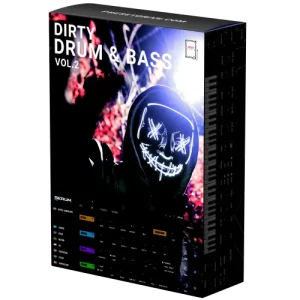
Dirty Drum & Bass Vol.2
Filthy bass presets for dubstep and riddim. Growls, wobbles, and screeches.
£29.99
Shop Now →Not sure yet? Grab our free taster pack first.


