Every producer has experienced it. You sit down to make music, open your DAW, and three hours later you have nothing to show for it. You tweaked oscillators endlessly, scrolled through presets for ages, and got lost in sound design rabbit holes instead of actually finishing a track.
Sound design is one of the most time-consuming parts of music production. But with the right workflow, you can create incredible sounds in a fraction of the time. Here are practical tips to speed up your sound design process without sacrificing quality.
1. Start with a Template
One of the biggest time wasters is setting up your project from scratch every session. Create a DAW template that includes:
- Your favourite synth instances already loaded (Serum, Vital, etc.)
- Basic effects chains on each channel (EQ, compression, reverb sends)
- A drum rack or channel with your go-to drum samples
- Sidechain routing already configured
- Your master chain ready to go
A good template can save you 15-20 minutes at the start of every session. Over a year of regular production, that adds up to dozens of extra hours of actual creative work.
2. Use Preset Packs as Starting Points
There is a misconception that using presets is cheating. It is not. Professional producers use presets all the time as starting points for their own sound design. The key is to modify and personalise them rather than using them completely untouched.
Start with a quality preset pack that matches your genre. Find a sound that is close to what you want, then tweak it to make it your own. This approach is dramatically faster than building every sound from an initialised patch.
3. Learn Your Synth Inside Out
It sounds obvious, but most producers only use about 20% of their synth’s capabilities. If you primarily use Serum, invest time in learning every feature thoroughly. Understand what each wavetable position does. Know how every modulation destination affects the sound. Learn the noise oscillator, the FX rack, the matrix routing.
The better you know your synth, the faster you can translate the sound in your head into an actual patch. Instead of randomly turning knobs hoping for something cool, you will know exactly which parameters to adjust to get the result you want.
4. Set Time Limits for Sound Design
This is a game changer. Give yourself a strict time limit for each sound design session. Set a timer for 15-20 minutes per sound. When the timer goes off, you either commit to what you have or move on.
Time limits force you to make decisions quickly and prevent perfectionism from derailing your session. You will be surprised how much faster you work when there is a deadline, even a self-imposed one.
5. Build a Personal Sound Library
Every time you create a sound you like, save it. Every single time. Build an organised library of your own presets, categorised by type:
- Bass (sub, mid, growl, wobble)
- Leads (pluck, saw, supersaw, acid)
- Pads (ambient, dark, lush, evolving)
- FX (risers, impacts, transitions, textures)
- Arps and sequences
Over time, you will build a collection of sounds that are uniquely yours. Future sessions become faster because you can pull from your own library instead of starting from scratch or browsing generic factory presets.
6. Use Reference Tracks Actively
Before you start designing a sound, listen to a reference track that has the type of sound you are going for. Analyse it. What frequency range is the sound in? How much distortion does it have? Is there modulation? What type of movement does it have?
Having a clear target sound in mind before you start designing dramatically reduces the amount of aimless tweaking you do. You know what you are aiming for, so every adjustment moves you closer to the goal.
7. Master Resampling
Resampling is the process of recording your synth output as audio, then processing and re-synthesising that audio. It is one of the fastest ways to create complex, unique sounds.
The workflow is simple:
- Create a basic sound in your synth
- Record it as audio
- Process the audio (distortion, filtering, time stretching, granular processing)
- Load the processed audio back into your synth as a wavetable or sample
- Process again if needed
Each round of resampling adds complexity and character. Many of the most iconic dubstep and bass music sounds were created through multiple rounds of resampling.
8. Batch Your Sound Design Sessions
Instead of doing sound design and arrangement in the same session, separate them. Dedicate specific sessions purely to sound design where your only goal is to create and save sounds. Then in separate sessions, focus on arrangement and composition using the sounds you have already created.
This works because sound design and arrangement use different creative mindsets. Switching between them constantly is mentally exhausting and slows you down. Batching keeps you in the zone for each type of work.
9. Learn Keyboard Shortcuts
This applies to both your DAW and your synth plugins. Learning keyboard shortcuts seems trivial, but the time savings compound massively over hundreds of sessions. In Serum alone, there are shortcuts for copying modulation routings, resetting parameters, and navigating between oscillators that can cut your workflow time significantly.
10. Limit Your Tools
Having 50 synth plugins gives you options, but it also gives you decision paralysis. Pick 2-3 synths and learn them deeply. For most bass music producers, Serum and one or two supporting synths is all you need.
The same applies to effects plugins. Pick your favourite compressor, EQ, distortion, and reverb. Learn them thoroughly. Mastery of a few tools beats surface-level knowledge of many.
Speed Up Your Workflow Today
The fastest way to accelerate your production workflow is to start with professional-quality sounds. Browse our preset collections to find expertly crafted starting points for your next project.
For more workflow advice from professional producers, MusicRadar’s production guides are an excellent resource worth bookmarking.
Related Preset Packs
Looking for professional bass music presets? Check out these Serum preset packs:
Get sounds that already sit in the mix
Skip the sound design. Our Serum packs and one-shots load straight into your DAW so you can finish a track tonight.
Ready to level up your sound?
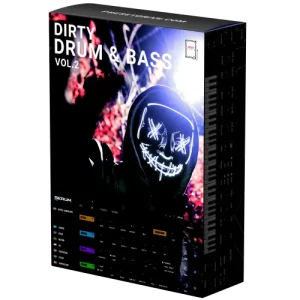
Dirty Drum & Bass Vol.2
Filthy bass presets for dubstep and riddim. Growls, wobbles, and screeches.
£29.99
Shop Now →New here? Start with our one-shots pack first.
