Neurofunk is the most technically demanding sub-genre in Drum and Bass. It combines aggressive bass design, precise sound engineering and complex arrangements into something that sounds almost alien. Producers like Noisia, Current Value, Mefjus, Phace, Icicle and Posij have pushed the boundaries of what is possible in a DAW, and Serum is one of the best tools available for creating the sounds that define this genre.
This guide breaks down how to produce neurofunk using Serum. We will cover neuro bass design from scratch, drum processing, arrangement structure and mixing techniques. Whether you are new to neurofunk or looking to sharpen your sound design skills, this tutorial gives you a practical foundation to build from.
What Makes Neurofunk Sound Like Neurofunk
Before diving into Serum patches, it helps to understand what separates neurofunk from other DNB sub-genres. Neurofunk is defined by its bass sounds. The sub-bass is clean and heavy, while the mid-range is filled with constantly evolving, modulated textures. Growls, screeches, metallic tones, FM synthesis sounds and heavily processed audio all sit in the mid-range and upper frequencies.
The drums are tight, punchy and heavily processed. Every element is EQ’d and compressed to fit precisely in its frequency slot. There is very little room for loose, untreated sounds. Neurofunk productions tend to sound clinical, precise and aggressive.
Artists like Noisia built their reputation on layered bass design and meticulous mixing. Mefjus brought a modern clarity and weight to the genre. Current Value pushed into more experimental, industrial territory. Phace combined musicality with raw technical precision. Understanding these reference points will help you aim your own productions in the right direction.
Neuro Bass Design in Serum
The Foundation – Growl Bass
The classic neurofunk growl is built from FM synthesis and wavetable manipulation. Here is how to build one from scratch in Serum.
- Oscillator A: Load a wavetable with harmonic content. Try “Analog_BD_Sin” or “Basic Mg” from the Analog folder. Set the wavetable position to somewhere in the middle where you get a rich, complex tone.
- Oscillator B: This is your FM source. Load a simple sine or triangle wave. Turn on FM from B in Oscillator A’s settings. Start with a low FM amount (around 20-30%) and increase until you hear the tone getting aggressive and metallic.
- Wavetable position modulation: Assign an LFO to the wavetable position of Oscillator A. Use a rate of 1/4 to 1/8 note. This creates the characteristic “moving” quality of neurofunk bass where the timbre shifts constantly.
- Filter: Route both oscillators through a low-pass filter. Set the cutoff around 1-3 kHz. Assign an envelope or LFO to the filter cutoff for movement. A short, snappy envelope gives you a percussive growl. A slower LFO gives you a more flowing, evolving sound.
- Distortion: Add distortion in the FX rack. Tube or Warm Tube modes work well for adding grit without destroying the tone. For more aggressive sounds, try Hard Clip or Diode. Keep the mix around 30-50% so you retain some of the clean signal underneath.
Play notes in the C1-C2 range. The growl should have weight in the low-mids and aggressive character in the upper mids. If it sounds thin, check your oscillator tuning and make sure Oscillator B is not too high in pitch relative to A.
Screeches and Metallic Tones
Neurofunk screeches are high-frequency, aggressive sounds that cut through the mix. They work as fills, transitions and layered elements on top of your main bass.
- Oscillator A: Use a bright wavetable. “Digital” category wavetables work well. Spectral wavetables or anything with lots of high-frequency content is ideal.
- FM Synthesis: Crank the FM amount higher than you would for a growl – 50-80%. This creates the harsh, metallic character that defines a screech.
- Pitch modulation: Assign an LFO or envelope to the pitch of Oscillator A or B. Even small pitch movements (1-3 semitones) create dramatic timbral shifts when FM synthesis is involved. Larger pitch sweeps create classic rising or falling screech effects.
- High-pass filter: Route through a high-pass filter set around 500-800 Hz. This removes the low-end mud and keeps the screech sitting above your sub bass.
- Distortion and effects: Use aggressive distortion (Hard Clip, Sine Fold, or Downsample). Add a short reverb or delay for space. The Hyper/Dimension effect in Serum can add width and stereo interest.
FM Bass Patches
FM synthesis is at the heart of neurofunk sound design. Serum makes FM accessible compared to dedicated FM synths, and the visual feedback helps you understand what is happening to your waveform in real time.
The key to good FM bass design is modulation depth control. Too little FM and the sound is boring. Too much and it becomes noise. The sweet spot is where you can hear complex harmonics being generated but the fundamental pitch is still clear and musical.
Try these FM experiments:
- Sine into sine: Clean, bell-like tones that become aggressive with higher FM amounts. Classic DX7 territory.
- Saw into sine: Richer harmonics from the start. FM adds metallic overtones on top of the already harmonically rich sawtooth.
- Square into triangle: Hollow, woody tones that become nasty and distorted with FM modulation.
- Noise modulation: Use Serum’s noise oscillator routed through the filter to add grit and texture. White noise filtered with a band-pass creates hissing, breathy textures that layer well with FM bass.
Using the Noise Oscillator
Serum’s noise oscillator is underrated for neurofunk. Load different noise samples and use the filter to shape them. “BL Rumble” adds low-end texture. “Bright White” adds high-frequency air and sizzle. “BL crackle” adds industrial character.
Route the noise through a band-pass filter and modulate the cutoff with an LFO. This creates sweeping, textured layers that add depth to your bass patches. Keep the noise oscillator level relatively low – it should add character, not dominate.
LFO Modulation for Movement
Static bass sounds do not work in neurofunk. Every element needs to move and evolve. LFOs are your primary tool for creating this movement.
Essential LFO Assignments
- Wavetable position: Creates timbral movement as the oscillator scans through different waveforms. Use rates of 1/4 to 1 bar for slow, evolving textures.
- Filter cutoff: Opens and closes the filter rhythmically. Synced rates (1/8, 1/16) create rhythmic pumping. Free-running rates create more organic movement.
- FM amount: Modulating the FM depth over time creates dramatic timbral shifts. Small amounts add subtle movement. Large amounts create the classic neurofunk “talking bass” effect.
- Distortion drive: Automating distortion intensity adds dynamics. The bass goes from clean to aggressive and back, creating tension and release.
- Pitch (subtle): Very small pitch modulation (0.5-2 semitones) via LFO adds a detuned, unstable quality. Be careful not to make the pitch modulation too obvious or the bass will sound out of tune.
LFO Shapes
Do not just use sine wave LFOs. Serum lets you draw custom LFO shapes, and this is where neurofunk producers spend a lot of time. Draw sharp ramps, stepped patterns, or complex multi-stage shapes. Each LFO shape creates a different rhythmic and timbral pattern in your bass.
Try drawing an LFO that ramps up quickly then drops off slowly. Assign it to filter cutoff. This creates a punchy attack with a long, filtered decay on each note. Now try the inverse – a slow ramp up with a quick drop. Completely different character from the same synthesis technique.
Drum Processing for Neurofunk
Kick Drum
The neurofunk kick needs to punch through a dense mix. Start with a short, punchy kick sample. Layer a sub-frequency sine wave underneath (50-60 Hz) for weight. Use a transient shaper to boost the attack and reduce the sustain. High-pass the kick around 30 Hz to remove sub-rumble, then boost slightly around 60-80 Hz for the body and 3-5 kHz for the click.
Snare
Neurofunk snares are typically layered. Combine a tight, punchy snare with a noise layer and sometimes a clap or additional transient layer. Compress the snare bus with a fast attack (1-5ms) and medium release. Add parallel compression for extra density. The snare should cut through the bass without sounding thin.
Hi-Hats and Cymbals
Keep hi-hats tight and controlled. Use closed hats for the main groove and open hats sparingly for accents. High-pass everything above 8-10 kHz for clarity. Pan hi-hat variations slightly left and right for width. Rides and cymbals should be filtered and sit behind the main groove elements.
Break Processing
Many neurofunk producers still use classic breaks (Amen, Think, Tramen) as a foundation, then layer individual hits on top. Process the break aggressively – compress it hard, EQ out any frequencies that clash with your bass, and use saturation to add density. The break provides groove and texture while the layered hits provide punch and clarity.
Drum Bus Processing
Send all your drums to a bus. Apply bus compression with a ratio of 2:1 to 4:1, medium attack and release. This glues the drum elements together. Add a touch of saturation for warmth. Some producers use multiband compression on the drum bus to control different frequency ranges independently.
Arrangement Tips
Intro (16-32 bars)
Build atmosphere with filtered pads, reversed effects and sparse percussion. Introduce elements one at a time. Create tension with risers, white noise sweeps and filtered bass previews. The intro should make the listener anticipate the drop.
Drop (16-32 bars)
The first drop hits with full drums and bass. In neurofunk, the drop is where your sound design takes centre stage. Switch between different bass patches every 4-8 bars to keep the listener engaged. Use fills, transitions and one-shot effects between sections. Do not let the same bass pattern loop for more than 8 bars without variation.
Breakdown (8-16 bars)
Strip back to atmospheric elements. Use this space to introduce a new melodic idea, a vocal sample, or a contrasting texture. The breakdown gives the listener a rest before the next drop. Build tension toward the end with risers and filtered drum rolls.
Second Drop (16-32 bars)
The second drop should introduce new bass sounds or variations. Many neurofunk tracks save their most aggressive or complex bass design for the second drop. Switch up the drum pattern slightly. Add new percussion elements or effect layers. The second drop should feel like an evolution of the first, not a copy.
Outro (16-32 bars)
Strip elements away gradually. Return to the atmospheric elements from the intro. Leave the drums running for DJs to mix out of. Keep the outro clean and functional.
Mixing for Neurofunk
Frequency Separation
The most important mixing concept in neurofunk is frequency separation. Your sub bass (below 150 Hz) should be mono and clean. Your mid-range bass (150 Hz – 5 kHz) is where all the interesting sound design lives. Your highs (above 5 kHz) are for drums, effects and air.
Use high-pass and low-pass filters to carve out space for each element. If your growl bass and your snare are fighting for the same frequency range, one of them needs to move. EQ is your most important mixing tool in neurofunk.
Sidechain Compression
Sidechain your bass to the kick drum. This creates the pumping effect that gives neurofunk its rhythmic energy and ensures the kick punches through the dense bass. Use a fast attack (0-1ms) and a release timed to the tempo (around 100-150ms at 174 BPM). You can also sidechain the bass to the snare for extra clarity.
Parallel Processing
Parallel processing is essential in neurofunk. Send your bass to a parallel channel, compress it heavily, and blend it back in with the dry signal. This adds density and aggression without destroying the dynamics of the original sound. You can also use parallel distortion and parallel filtering for creative effects.
Stereo Width
Keep everything below 150 Hz mono. Above that, use stereo widening techniques to create an immersive mix. The Hyper/Dimension effect in Serum adds stereo width to your patches. Mid-side EQ on your master bus lets you control the width of different frequency ranges independently. Wide mixes sound impressive on headphones but check them in mono to make sure nothing disappears.
Referencing
Compare your mix to professional neurofunk tracks regularly. Load a Noisia, Mefjus or Phace track into your DAW and A/B against your own mix. Pay attention to the balance between sub bass and mids, the punch of the drums, and the overall loudness and density. Reference tracks are the fastest way to identify problems in your mix.
Common Neurofunk Mistakes
- Too much distortion: Distortion adds aggression but too much turns everything into noise. Use it in moderation and always keep some clean signal blended in.
- Weak sub bass: The sub needs to hit hard even when the mid-range is complex. Layer a clean sub sine underneath your textured bass patches.
- No variation: Looping the same 8-bar bass pattern for an entire drop is boring. Switch sounds, add fills and keep the arrangement moving.
- Ignoring the drums: Neurofunk is about bass, but weak drums ruin the track. Spend as much time on drum processing as you do on sound design.
- Over-compression: Squashing everything flat kills the dynamics. Use compression for control and punch, not to make everything as loud as possible.
Recommended Workflow
Here is a practical workflow for producing neurofunk:
- Sound design session: Spend time creating bass patches in Serum without worrying about a track. Save everything you like as presets. Build a library of growls, screeches, FM patches and textures.
- Drum programming: Build a drum groove separately. Get the kick, snare and hats sounding punchy and tight before adding bass.
- Arrangement sketch: Lay out a basic arrangement with placeholder bass sounds. Get the structure right first.
- Bass arrangement: Drop your sound design presets into the arrangement. Sequence different patches across the drop. Add transitions and fills.
- Mixing: Balance everything. EQ, compress, sidechain. Compare to reference tracks.
- Final polish: Add effects, automation, risers and impacts. Master the track.
This workflow separates the creative and technical phases, which keeps you moving forward instead of getting stuck trying to do everything at once.
Speed Up Your Neurofunk Production
Sound design from scratch is rewarding but time-consuming. If you want a head start with professionally designed neuro bass patches, check out the Drum and Bass preset packs at Preset Drive. Each pack includes ready-to-use Serum presets covering growls, screeches, FM basses, sub layers and more. Load them up, tweak them to fit your track, and spend more time on arrangement and mixing instead of starting from a blank patch every session.
Browse the full collection of Serum presets and find sounds that fit your production style.
Related Preset Packs
Looking for professional bass music presets? Check out these Serum preset packs:
‘trace’ => ‘
#0: Elementor\Core\Logger\Manager -> shutdown()
‘,
)]
For a complete overview of neuro bass sounds and preset recommendations, see our Neuro Bass Serum Presets guide.
Ready to level up your sound?
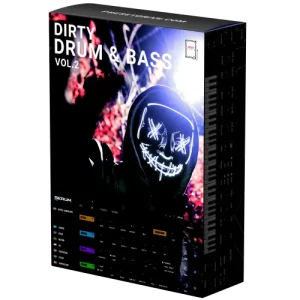
Dirty Drum & Bass Vol.2
Complex neuro bass presets with heavy modulation and processing.
£29.99
Shop Now →Not sure yet? Grab our free taster pack first.
