The reese bass is one of the most important sounds in drum and bass production. Named after Kevin Saunderson’s track “Just Want Another Chance” released under his Reese alias, this detuned, swirling bass sound has become the foundation of nearly every DnB subgenre. In this tutorial, I will walk you through how to create a reese bass in Xfer Serum from scratch.
What Makes a Reese Bass?
A reese bass is essentially two or more detuned saw waves playing together. The slight pitch difference between the oscillators creates a phasing, swirling effect that gives the reese its characteristic movement. The more detuning you add, the more aggressive and wide the sound becomes. A subtle reese works for liquid DnB, while a heavily processed one sits perfectly in neurofunk or jump up.
Step 1: Set Up Oscillator A
Open Serum and start with the init preset. On Oscillator A, select the Basic Shapes wavetable and set the wavetable position to a full saw wave. This is your starting point. Set the octave to 0 and make sure the level is at about 75%. Keep the phase on normal for now.
Unison settings
This is where the magic happens. Set the unison voices to 2. Set the detune amount to around 0.15 to 0.20. This creates that classic beating, phasing effect between the two voices. You will hear the sound immediately start to move. If you want a wider, more aggressive reese, push the detune higher. For a tighter, more controlled sound, keep it subtle.
Step 2: Set Up Oscillator B
Turn on Oscillator B and load the same Basic Shapes wavetable. Set it to a saw wave as well. Now here is the key: detune Oscillator B by a few cents using the fine tune knob. Try setting it to about +7 cents. This adds another layer of detuning on top of the unison, creating a thicker, more complex phasing pattern. Set the level to about 70% so it blends with Oscillator A without overpowering it.
Step 3: Filter Settings
Route both oscillators through Filter 1. Select a low pass filter, and I recommend the MG Low 24 for a warm, musical rolloff. Set the cutoff to around 500-600 Hz as your starting point. This is important because a reese bass should have movement in the filter. Without filter modulation, it will sound static and lifeless.
Adding filter movement
Assign LFO 1 to the filter cutoff. Set the LFO rate to about 1/4 or 1/2 depending on the tempo of your track. Use a sine or triangle wave shape for smooth, natural movement. Set the modulation amount so the filter sweeps between about 300 Hz and 2 kHz. This gives you that classic reese movement where the bass swells up and dips back down.
Step 4: Add Some Grit with Distortion
A clean reese is nice, but most modern DnB tracks use some form of distortion to add harmonic content. In Serum FX section, add a distortion effect. Start with the Tube mode for a warm, musical distortion. Set the drive to about 30-40%. If you want something more aggressive, try the Hard Clip or Diode modes. The distortion will bring out the mid-range harmonics and help the bass cut through a busy mix.
Step 5: Effects Chain
After distortion, add a subtle chorus effect. This widens the stereo image and adds more movement. Keep the mix low, around 15-20%, or it will wash out the bass. Follow this with a compressor to tighten up the dynamics. A ratio of about 3:1 with moderate attack and fast release works well. Finally, add an EQ to clean up any unwanted low rumble below 30 Hz and any harsh frequencies above 8 kHz.
Step 6: Envelope Settings
For a typical reese bass used in DnB, you want a fairly quick attack (around 5-10 ms to avoid clicks), full sustain, and a medium release of about 200-300 ms. This lets the notes flow smoothly without abrupt cuts. If you are making rolling DnB, a slightly longer release helps the bass notes blend together.
Step 7: Playing Your Reese
Reese basses are almost always played as monophonic single notes. In Serum, go to the Voicing tab and set it to Mono. Enable Legato mode so that when you play overlapping notes, the sound glides smoothly between them. Set the portamento to about 30-50 ms for a subtle slide between notes. This is what gives rolling DnB bass lines that fluid, connected feel.
Processing Outside Serum
Once you have your basic reese dialled in, there is more you can do in your DAW. Try duplicating the bass track and high-passing one copy above 200 Hz for the mid-range layer, and low-passing the other below 200 Hz for the sub. This lets you process each frequency range independently. You can add more distortion and stereo processing to the mid layer while keeping the sub clean and mono.
Get Ready-Made Reese Basses
If you want professional quality reese basses without building them from scratch, the Dirty DnB Vol 1 preset pack from Preset Drive includes several variations of reese basses designed for different DnB styles. Each preset is fully tweakable, so you can use them as starting points and adjust to fit your tracks. It saves hours of sound design time and the presets are built by producers who actually make DnB.
Common Mistakes to Avoid
The biggest mistake beginners make is over-detuning the reese. Too much detuning sounds messy and unfocused. Start subtle and increase until you find the sweet spot. Another common issue is not filtering properly. An unfiltered reese bass has too much high frequency content and will clash with other elements in your mix. Always use a low pass filter with some movement. Finally, do not forget to check your bass in mono. A heavily detuned, stereo-widened reese can have serious phase cancellation issues in mono. Always check and make sure the fundamental frequencies are solid.
For more DnB production resources and Serum presets, visit the Preset Drive shop.
PHP: 2026-03-15 12:33:17 [notice X 0][/var/www/presetdrive/wp-content/plugins/elementor-pro/modules/forms/submissions/actions/save-to-database.php::193] {closure:ElementorPro\Modules\Forms\Submissions\Actions\Save_To_Database::__construct():193}(): Implicitly marking parameter $exception as nullable is deprecated, the explicit nullable type must be used instead [array (
‘trace’ => ‘
#0: Elementor\Core\Logger\Manager -> shutdown()
‘,
)]
For a complete overview of Reese bass sounds and preset recommendations, see our Reese Bass Serum Presets guide.
Ready to level up your sound?
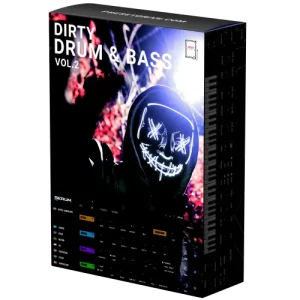
Dirty Drum & Bass Vol.2
Deep reese bass presets and dirty sub-bass sounds for your productions.
£29.99
Shop Now →Not sure yet? Grab our free taster pack first.

