Why Layer Your Bass Sounds
Bass layering is one of the most important techniques in electronic music production. A single bass sound rarely covers the full frequency spectrum on its own. By combining multiple layers, each handling a different frequency range, you create a bass sound that is both powerful and detailed.
Professional producers use bass layering to achieve the massive, full-range bass sounds you hear in commercial tracks. This guide shows you how to layer bass sounds effectively using Serum and your DAW.
The Three-Layer Bass System
The most common approach uses three distinct layers, each responsible for a different part of the frequency spectrum.
Layer 1: Sub Bass (20-80 Hz)
The sub layer provides the foundational weight of your bass. Use a clean sine wave or a slightly saturated sine for warmth. This layer should be completely mono with no stereo effects, detuning or modulation below 100 Hz. Keep it simple and clean.
In Serum, use a basic sine wavetable with no unison, no detune and minimal effects. A touch of soft clip distortion can add harmonics that help the sub translate on smaller speakers without adding muddiness.
Layer 2: Mid Bass (80-500 Hz)
The mid layer adds character, texture and movement to your bass. This is where Reese basses, wobbles, growls and other processed sounds live. You have more freedom here to use modulation, distortion and effects since this range is above the critical sub frequencies.
Load a Serum preset or design a sound using saw waves, wavetable scanning or FM synthesis. Add filter modulation with LFOs for movement. Apply distortion and compression for aggression. High-pass filter this layer at 80-100 Hz so it does not conflict with your sub.
Layer 3: Top Bass (500 Hz+)
The top layer adds presence, air and definition. This can be a bright, fizzy layer of harmonics from distortion, a separate synth sound or even a processed noise layer. This layer helps your bass cut through a busy mix with lots of drums and other elements.
High-pass filter at 500 Hz and use stereo widening to create space. This layer can be wider since it is above the critical mono zone. Subtle chorus, delay or haas effect all work well here.
Setting Up Bass Layers in Your DAW
FL Studio
Create three separate mixer channels, one for each layer. Load a Serum instance on each channel. Route all three to a bass bus channel where you can apply group processing. Use Fruity Limiter on the bus for glue compression and sidechain from the kick.
Ableton Live
Create three audio/instrument tracks grouped into a bass group. Load Serum on each track. Add an audio effect rack on the group for bus processing. Use a compressor with sidechain input from the kick drum for that pumping effect.
Frequency Management Between Layers
High-Pass and Low-Pass Filtering
The most important step in bass layering is keeping each layer in its own frequency lane. Use steep high-pass filters (24 dB/oct or steeper) to cut the low end from your mid and top layers. Use a low-pass filter on your sub to remove any harmonics above 100-150 Hz if they clash with the mid layer.
Avoiding Phase Issues
When two sounds play the same frequencies, they can cancel each other out (phase cancellation) or combine in unpredictable ways. This is why frequency separation is critical. If your layers still clash, try:
- Nudging one layer slightly in time (1-5ms)
- Using a different oscillator waveform for each layer
- Inverting the polarity of one layer and listening for improvement
- Using a linear phase EQ for precise frequency cuts
Mono Compatibility
Always check your layered bass in mono. Everything below 200 Hz should be mono compatible. If your bass disappears or loses power when summed to mono, you have phase issues between your layers that need addressing.
Processing Your Bass Layers
Individual Layer Processing
Process each layer independently before the bus. On the sub: gentle compression and a limiter to control peaks. On the mid: distortion, multiband compression, EQ for character. On the top: chorus, EQ for brightness, limiting.
Bus Processing
On the bass bus (all layers combined), apply glue compression with a ratio of 2:1 to 4:1 and medium attack/release. This makes the layers feel like one cohesive sound. Follow with a gentle limiter to catch any peaks from the combined signal.
Sidechain Compression
Sidechain your entire bass bus to the kick drum. This creates space for the kick to punch through without reducing the overall bass energy. Use a fast attack and medium release for DNB, or a slightly slower attack for house and other four-on-the-floor genres.
Using Presets for Bass Layering
Quality preset packs make bass layering much faster. Instead of designing each layer from scratch, you can load a sub preset, a mid-range preset and a top layer preset, then focus your energy on arrangement and mixing.
Preset Drive Serum packs include dedicated sub basses, mid-range basses and textured lead sounds that layer together perfectly. Each preset has mapped macros so you can adjust the character of each layer quickly.
Common Bass Layering Mistakes
- Too many layers: Three layers is usually enough. More layers create more phase problems and muddiness
- Not filtering properly: Each layer must have its own frequency space. Overlap causes problems
- Ignoring phase: Always check in mono. If it sounds weak in mono, fix the phase relationships
- Over-processing: Let each layer breathe. Too much compression and distortion on every layer creates a fatiguing, harsh sound
- All layers playing the same pattern: Vary the rhythm or articulation between layers for more interest
Conclusion
Bass layering is essential for creating powerful, professional-sounding bass in electronic music. Use the three-layer system (sub, mid, top), keep each layer in its own frequency range, and process both individually and as a group. Start with quality presets to speed up your workflow and focus on the creative side of production.
Ready to build massive layered basses? Browse our Serum preset collection for professional sounds designed for layering.
Related Preset Packs
Looking for professional bass music presets? Check out these Serum preset packs:
Ready to level up your sound?
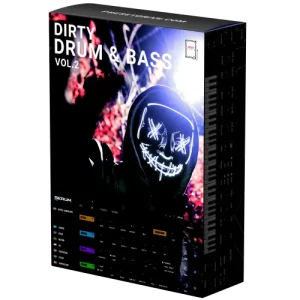
Dirty Drum & Bass Vol.2
Deep reese bass presets and dirty sub-bass sounds for your productions.
£29.99
Shop Now →Not sure yet? Grab our free taster pack first.
