Why Ableton Live is Perfect for Dubstep
Ableton Live has become the go-to DAW for dubstep production, and for good reason. Its flexible workflow combines linear arrangement with a clip-based session view that is perfect for experimenting with bass sounds and ideas. The built-in audio effects are excellent for sound design, and the warping engine makes it easy to manipulate samples and resampled audio.
Many of the biggest dubstep producers use Ableton, including Skrillex, Excision, Virtual Riot, and Subtronics. The workflow suits the genre’s emphasis on sound design and creative processing, where you often bounce audio, process it, and bounce again in iterative cycles.
This guide covers the complete dubstep production process in Ableton Live, from setting up your project to mixing your finished track.
Setting Up Your Dubstep Project
Template and Tempo
Start by setting your tempo to 140-150 BPM. The classic dubstep tempo is 140, but modern styles sometimes push up to 150. Create a template with the following tracks: Kick, Snare, Hi-Hats, Percussion, Sub Bass, Mid Bass, Lead, Pads, FX, and a Master bus. Colour code everything for easy navigation.
Set up return tracks for reverb and delay. Use Ableton’s Reverb or a third-party reverb plugin on one return, and a tempo-synced delay on another. These sends will be used across multiple elements in your track.
Key Ableton Tools for Dubstep
Ableton’s built-in tools are incredibly useful for dubstep. The Saturator adds warmth and harmonics. The Multiband Dynamics compressor is perfect for taming bass sounds. The Auto Filter creates classic filter sweeps and wobbles. And the Utility plugin lets you control stereo width, which is essential for keeping your bass mono below a certain frequency.
Building Your Drums
Dubstep drums play in half-time, meaning your kick hits on beat 1 and your snare hits on beat 3 (the “and” of beat 2 in half-time feel). This creates that heavy, head-nodding groove that defines the genre. Program a basic pattern first, then add ghost notes, fills, and variations.
Your kick drum should be tight and punchy with a controlled low end. Do not let it ring too long or it will clash with your sub bass. Layer a top kick with a sub kick for the best of both worlds. High-pass the top kick around 100Hz and low-pass the sub kick around 80Hz for a clean crossover.
Hi-hats and percussion add groove and energy. Program rides and open hats on offbeats for movement. Add fills every 4-8 bars to signal phrase changes. Use velocity variation to create a more human, dynamic feel rather than static robotic patterns.
Bass Sound Design in Ableton
Sub Bass Layer
Your sub bass is the foundation. Use Serum or Ableton’s Operator to create a clean sine wave sub that follows your bass pattern. Keep it mono, keep it clean, and make sure it sits right in the low-end pocket. Sidechain it to the kick for clarity.
Mid-Range Bass Design
The mid-range bass is where dubstep gets creative. Load up Serum and start designing growls, wobbles, and aggressive textures. Use wavetable scanning, FM synthesis, and heavy distortion to create sounds with character. Automate parameters to create evolving bass lines that keep the listener interested.
Ableton’s resampling workflow is powerful for dubstep bass. Record your Serum output to an audio track, then chop, warp, and process the audio further. Apply Ableton’s audio effects like Erosion, Frequency Shifter, and Grain Delay for unique textures that you cannot get from synthesis alone.
Arrangement for Dubstep
A standard dubstep arrangement in Ableton might look like this. 16-bar intro with atmospheric elements and a simple drum pattern. 8-bar build-up with rising tension. 16-bar first drop with full drums and bass. 16-bar breakdown with melodic or atmospheric elements. 8-bar build to the second drop. 16-bar second drop with a different bass sound or variation. 16-bar outro for DJ mixing.
Use Ableton’s Arrangement View for your final layout, but consider building ideas in Session View first. Session View lets you trigger different clips and experiment with combinations before committing to a linear arrangement.
Mixing Your Dubstep Track
The mix is where your dubstep track comes together. High-pass everything except your kick and sub bass. Use Ableton’s EQ Eight for surgical frequency cuts. Apply sidechain compression to create space between the kick and bass. Use reference tracks to compare your mix to professional releases.
For bass sounds, check out the Preset Drive shop for Serum preset packs loaded with dubstep basses, growls, and wobbles. Having quality presets saves hours of sound design time and gives you professional starting points.
Try our Free Serum Taster Pack to add some heavy bass presets to your Ableton sessions.
Level up your dubstep productions. Visit the Preset Drive shop for Serum presets that will give your Ableton dubstep projects the heavy bass sounds they need. Instant download, ready to use.
Ready to level up your sound?
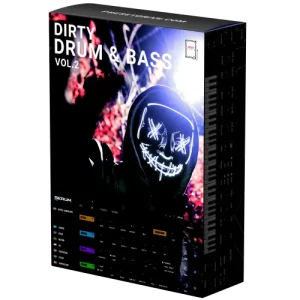
Dirty Drum & Bass Vol.2
Filthy bass presets for dubstep and riddim. Growls, wobbles, and screeches.
£29.99
Shop Now →Not sure yet? Grab our free taster pack first.


