Sampling in Bass Music – The Basics
Sampling is deeply embedded in bass music culture. From jungle and DnB chopping up old breakbeats to dubstep producers lifting vocal snippets and atmospheric textures, sampling has shaped the genre from day one. But with sampling comes legal responsibility, and understanding the rules helps you avoid expensive mistakes.
This guide covers both the creative techniques of sampling in bass music and the legal framework you need to know. Whether you are flipping old records or processing field recordings, these tips will keep your productions both creative and legally sound.
Legal Fundamentals of Sampling
Copyright and Clearance
Every commercial recording is protected by two separate copyrights: the composition (the melody, lyrics, and musical arrangement) and the master recording (the specific recorded performance). To legally use a sample from a released track, you technically need clearance from both copyright holders.
For major releases or tracks that get significant attention, uncleared samples can result in legal action, takedowns, or financial claims. The music industry has become more aggressive about detecting uncleared samples thanks to automated content recognition technology.
Royalty-Free and Creative Commons
The safest approach is to use royalty-free sample packs or Creative Commons licensed material. These come with a licence that allows you to use the samples in your productions without additional clearance. Read the specific licence terms carefully. Some require attribution, some prohibit commercial use, and some have other restrictions.
Many producers build their entire palette from royalty-free sources combined with their own recordings and synthesis. This eliminates any legal risk while still giving you a massive library of raw material to work with.
The Grey Area of Small Samples
There is a common belief that sampling less than a certain number of seconds is automatically legal. This is a myth. There is no specific duration threshold in copyright law. Even a fraction of a second can infringe copyright if the sample is recognisable. That said, heavily processed and unrecognisable samples are practically impossible to detect or claim against.
Creative Sampling Techniques for Bass Music
Vocal Sampling
Vocal snippets are a staple of bass music. A well-placed vocal chop can define a track. Source your vocals from royalty-free vocal packs, record your own voice, or use text-to-speech generators for robotic vocal elements. Process vocals through pitch shifting, time stretching, and effects to create something unique.
Short vocal phrases (“let me hear you”, “drop the bass”, single syllables) work well as rhythmic elements and hype builders. Longer vocal lines can serve as hooks or breakdown elements. Chop them up and rearrange the syllables for glitchy, IDM-influenced vocal patterns.
Breakbeat Chopping
Chopping breakbeats is fundamental to DnB and jungle production. Find a clean breakbeat (the Amen Break, Apache, Think Break, or modern royalty-free alternatives), slice it into individual hits, and rearrange them into new patterns. This gives you the organic feel of a real drummer with the precision of programmed drums.
Process individual chops differently. Pitch the snare down for weight, add saturation to the kick, time-stretch a hi-hat hit for a washy textural element. The beauty of chopping is that each slice can be treated as its own instrument.
Atmospheric and Foley Sampling
Record your own atmospheric samples using your phone or a portable recorder. City sounds, nature recordings, mechanical noises, and room ambience all make excellent textural elements in bass music. These recordings are 100% original and copyright-free because you made them.
Process field recordings through granular synthesisers, spectral processors, and extreme effects chains to transform everyday sounds into otherworldly bass music textures. A recording of rain can become a shimmering pad. A creaking door can become a terrifying riser.
Processing Samples to Make Them Your Own
Heavy Processing
The more you process a sample, the more it becomes your own creation rather than someone else work. Run samples through pitch shifting (extreme pitch changes make things unrecognisable), time stretching (especially with extreme settings that introduce artifacts), granular processing (breaks the sample into tiny grains and reassembles them), and spectral processing (manipulates the frequency content in unusual ways).
Layering Multiple Sources
Combine multiple samples together to create something that does not resemble any single source. Layer a vocal snippet with a mechanical noise and a pitched-down piano note. Process them together through shared effects. The result is a unique composite sound that is entirely your own. Browse our sound collections for inspiration on creative sound layering techniques.
Build Your Sample Library
Start building a personal sample library today. Record sounds, chop up your own finished tracks, and collect royalty-free packs. Organise everything by category (vocals, drums, textures, foley, instruments) and keep it tidy. A well-organised sample library is one of the most valuable production assets you can have.
For Serum-based production, grab our free Serum taster pack and use the presets as a starting point for your sampling experiments. Record the output, chop it up, resample it, and make it your own.
Ready to level up your sound?
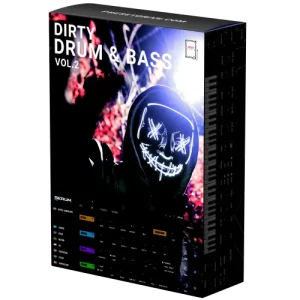
Dirty Drum & Bass Vol.2
Professional DnB presets for Serum. Reeses, neuro basses, subs, and more.
£29.99
Shop Now →Not sure yet? Grab our free taster pack first.
