What Defines UK Bass Music?
UK bass music is not a single genre. It is a family of interconnected styles that have evolved from the underground club scenes across Britain. From garage and grime through dubstep and DnB to bass house and beyond, UK producers have consistently pushed electronic music forward with heavy low-end focus and innovative rhythm patterns.
What ties all these styles together is an emphasis on bass weight, syncopated rhythms, and a raw energy that comes from club culture. Whether you are drawn to the 170BPM intensity of drum and bass or the half-time swagger of dubstep, UK bass music rewards producers who understand how to make speakers move.
Getting started in bass music production can feel overwhelming because of the variety of styles and techniques involved. This guide breaks down the essentials you need to know, from choosing your software to making your first track.
Choosing Your DAW and Core Plugins
DAW Options for Bass Music
Any major DAW can produce bass music, but some are more popular in the community than others. Ableton Live is the most widely used among bass music producers thanks to its flexible workflow, excellent warping, and strong live performance features. FL Studio is another popular choice, particularly for DnB producers, with its powerful piano roll and pattern-based workflow.
Logic Pro is a solid option for Mac users, offering great built-in instruments and effects at a reasonable price. Bitwig Studio has been gaining traction with its modular approach and advanced sound design capabilities. Ultimately, the best DAW is the one you learn thoroughly.
Essential Synth Plugins
Serum by Xfer Records is the industry standard for bass music sound design. Its wavetable engine, intuitive interface, and powerful modulation system make it perfect for creating everything from deep subs to screaming leads. If you are serious about bass music, Serum is worth every penny.
Beyond Serum, consider picking up Vital (free), Phase Plant (for advanced modular synthesis), and a good sampler plugin for working with breaks and one-shots.
Understanding Bass Music Fundamentals
Tempo and Rhythm
Different UK bass styles operate at different tempos. Drum and bass sits at 170-180 BPM. Dubstep and riddim typically run at 140-150 BPM in half-time. Bass house and UK garage hover around 128-135 BPM. Grime sits at 140 BPM. Understanding these tempo ranges helps you identify the style you want to produce.
Rhythm is equally important. UK bass music is defined by its drum patterns. DnB uses rolling breakbeats with syncopated snare placements. Dubstep features that characteristic half-time feel with a heavy snare on the third beat. Garage uses shuffled, swung rhythms that create a bouncier feel.
Sound Design Basics
Bass sound design is at the heart of UK bass music. Learning the fundamentals of synthesis, specifically wavetable and subtractive synthesis, will serve you well across every subgenre. Start by understanding oscillators, filters, envelopes, and LFOs. These four building blocks are the foundation of every bass sound you will ever make.
Do not try to learn everything at once. Pick one synth, learn it deeply, and build your skills gradually. Watching YouTube tutorials is helpful, but actually sitting down and turning knobs is where real learning happens.
Your First Bass Music Track
Start simple. Choose a subgenre, set your tempo, and build a basic drum pattern. Layer a simple sub bass underneath, add a lead or pad for melodic interest, and arrange it into a basic structure with an intro, drop, and outro. Your first track will not be perfect, and that is completely fine. The goal is to finish something.
Focus on getting your low end right. Use a spectrum analyzer to check that your sub bass is clean and centered. High-pass filter everything that does not need low-end energy. Sidechain your bass to your kick drum to prevent clashing. These basics will make a bigger difference than any fancy technique.
Building Your Sound Library
Having quality sounds ready to go accelerates your learning process dramatically. Instead of spending hours trying to design the perfect bass from scratch, start with presets and learn how they are built by studying the settings. This reverse-engineering approach teaches you sound design while letting you actually make music.
Browse the Preset Drive shop for Serum preset packs tailored to specific bass music styles. From DnB to dubstep to bass house, each pack gives you production-ready sounds plus a learning resource you can dissect and customize.
Not sure if presets are right for you? Try the Free Serum Taster Pack and load up some professionally designed sounds in your next session. You might be surprised how much you learn by opening up a well-crafted preset and exploring its settings.
Ready to start your bass music journey? Head over to the Preset Drive shop and grab some Serum presets that will kickstart your productions. Every pack comes with sounds designed by producers who know UK bass music inside out.
PHP: 2026-03-15 12:34:16 [notice X 0][/var/www/presetdrive/wp-content/plugins/elementor-pro/modules/forms/submissions/actions/save-to-database.php::193] {closure:ElementorPro\Modules\Forms\Submissions\Actions\Save_To_Database::__construct():193}(): Implicitly marking parameter $exception as nullable is deprecated, the explicit nullable type must be used instead [array (
‘trace’ => ‘
#0: Elementor\Core\Logger\Manager -> shutdown()
‘,
)]
For a complete overview of UK bassline sounds and preset recommendations, see our UK Bassline Serum Presets guide.
Ready to level up your sound?
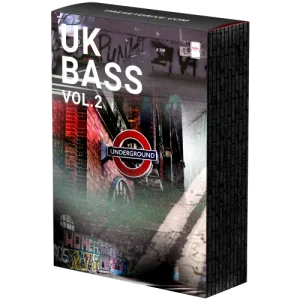
UK Bass Vol.2
Authentic UK bass presets. Garage, bassline, and 2-step sounds for Serum.
£29.99
Shop Now →Not sure yet? Grab our free taster pack first.


