Serum vs Vital: Which Synth is Better for Bass Music
Serum and Vital are the two most popular wavetable synthesisers for electronic music production. Both are powerful, both can create incredible bass sounds, and both have passionate user bases. But which one is right for you? This comparison breaks down the key differences to help you decide.
Overview
Serum by Xfer Records
Released in 2014, Serum quickly became the industry standard for sound design in electronic music. Created by Steve Duda, it offers two wavetable oscillators, a sub oscillator, a noise oscillator, a powerful modulation system, and a comprehensive effects rack. Serum costs around $189 USD or is available through Splice Rent-to-Own for $9.99/month.
Vital by Matt Tytel
Released in 2020, Vital is an open-source wavetable synthesiser that offers a free version with impressive capabilities. It features three wavetable oscillators, a sample oscillator, advanced modulation with visual feedback, and spectral warping features. The free version gives you access to most features, with paid tiers ($25-$80) unlocking additional wavetables and presets.
Sound Engine Comparison
Oscillators
Serum has 2 wavetable oscillators plus a sub oscillator and noise generator. Vital has 3 wavetable oscillators plus a sample oscillator. Vital wins on oscillator count, which can mean less layering is needed for complex sounds. However, Serum oscillators are tried and tested in millions of tracks and the sound quality is exceptional.
Wavetable Editing
Serum has a built-in wavetable editor that lets you draw, import audio, create from formulas and morph between frames. It is intuitive and powerful. Vital also has wavetable editing but adds spectral warping modes that let you transform wavetables in unique ways not possible in Serum. For experimental sound design, Vital has an edge here.
Sound Quality
Both synths produce high-quality audio with clean, alias-free oscillators. In blind tests, most producers cannot reliably tell them apart. Serum has a slightly warmer character according to some users, while Vital can sound slightly more clinical. In practice, the difference is negligible and both sound excellent in a mix.
Modulation
Serum Modulation
Serum uses a drag-and-drop modulation system. Click a modulation source (LFO, envelope, macro) and drag it to any parameter. The modulation depth appears as a blue ring around the target knob. It is simple, fast and effective. Serum has 3 envelopes, 4 LFOs and 4 macro controls.
Vital Modulation
Vital modulation system is more visual and arguably more powerful. Modulation connections appear as coloured lines between source and destination. You can see all modulation routing at a glance. Vital also offers more modulation sources: unlimited LFOs, random generators, and modulation remap curves. For complex, evolving sounds, Vital modulation is more flexible.
Effects
Serum FX Rack
Serum includes 10 effect modules: Distortion, Flanger, Phaser, Chorus, Compressor, Multi-Band Compressor, Delay, Reverb, EQ, Filter. You can reorder them in the chain. The distortion module alone has 19 modes including Tube, Warm Tube, Diode, and more. Serum effects are high quality and often eliminate the need for external plugins.
Vital FX
Vital includes similar effects: Chorus, Compressor, Delay, Distortion, EQ, Filter, Flanger, Phaser, Reverb. The quality is good but some users prefer Serum distortion modes for bass sound design specifically. Vital distortion has fewer modes but still covers the essentials.
CPU Performance
Serum CPU Usage
Serum is generally well-optimised but can be CPU-heavy with high unison voice counts and oversampling enabled. A complex patch with 16 unison voices and full effects can be demanding. Serum offers draft mode and oversampling options to manage CPU load.
Vital CPU Usage
Vital can be slightly more CPU-hungry than Serum in some scenarios, particularly with multiple oscillators active and heavy modulation. However, it also offers quality settings to reduce CPU load. Both synths perform similarly on modern hardware and neither should be a problem unless you are running many instances simultaneously.
Preset Ecosystem
Serum Presets
Serum has by far the largest preset ecosystem of any software synthesiser. Thousands of preset packs are available from hundreds of sound designers covering every genre. This is one of Serum biggest advantages: whatever sound you need, someone has already created a preset for it. The community and commercial preset market is massive.
Vital Presets
Vital preset ecosystem is growing but still much smaller than Serum. Fewer sound designers create for Vital, and fewer commercial preset packs are available. If you rely heavily on presets for your workflow, Serum gives you significantly more options.
Price Comparison
Serum
- Full purchase: $189 USD (one-time)
- Splice Rent-to-Own: $9.99/month until paid off
- No free version available
Vital
- Free version: Full synth engine with 75 presets and 25 wavetables
- Plus: $25 (more presets and wavetables)
- Pro: $80 (full preset and wavetable library, text-to-wavetable feature)
If budget is your primary concern, Vital free version is an incredible value. You get a professional-grade wavetable synth at no cost.
Which is Better for Bass Music
For Drum and Bass
Serum is the industry standard for DNB bass design. Most tutorials, sound design walkthroughs and preset packs target Serum. If you are making DNB, Serum gives you the biggest ecosystem of resources and sounds to work with. The distortion modes are particularly well-suited to neuro and jump-up bass tones.
For Bass House
Both work excellently for bass house. Serum mid-range wobble basses are legendary in the genre. Vital can achieve similar results with its spectral warping adding unique character possibilities.
For Sound Design and Experimentation
If you want to push boundaries and create unusual sounds, Vital advanced modulation and spectral features give you more experimental tools. The visual feedback on modulation routing also makes complex patches easier to understand and modify.
Our Recommendation
For bass music production, Serum remains the best choice for most producers. The preset ecosystem alone makes it worth the investment. When you can access thousands of professionally designed sounds, tutorials for every technique, and a community of millions of users, the workflow benefits are substantial.
That said, Vital is an excellent free alternative if you are on a budget. Many producers use both: Serum as their primary bass synth with the largest preset library, and Vital for experimental sound design where its spectral warping and advanced modulation shine.
Level Up Your Serum
If you choose Serum (or already own it), quality presets dramatically speed up your production. Instead of spending hours designing every sound, load a professional preset and tweak it to fit your track.
Preset Drive Serum preset packs cover Drum and Bass, Bass House, UK Bass and more. Every preset has mapped macros for quick customisation and is designed to sit perfectly in a mix.
Conclusion
Both Serum and Vital are excellent wavetable synthesisers capable of professional-quality bass music production. Serum wins on preset ecosystem, industry adoption and proven track record. Vital wins on price (free), modulation flexibility and experimental features. For most bass music producers, Serum is the safer choice. For those on a budget or seeking experimental sound design, Vital is outstanding.
Ready to supercharge your Serum? Browse our complete Serum preset collection for professional bass sounds across every genre.
Related Preset Packs
Looking for professional bass music presets? Check out these Serum preset packs:
Ready to level up your sound?
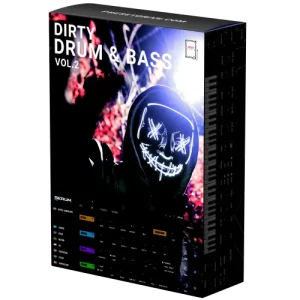
Dirty Drum & Bass Vol.2
Professional DnB presets for Serum. Reeses, neuro basses, subs, and more.
£29.99
Shop Now →Not sure yet? Grab our free taster pack first.
