
The Two Giants of Bass Music Synthesis
Serum and Massive are the two most talked about synthesizers in bass music production. Both have been used on countless tracks across DnB, dubstep, bass house, and every other bass-heavy genre you can think of. Choosing between them is a decision many producers face, and the answer is not always straightforward.
Serum, developed by Xfer Records and released in 2014, quickly became the industry standard thanks to its visual workflow and wavetable flexibility. Massive, created by Native Instruments and released back in 2007, defined an entire era of dubstep and bass music before Serum existed. Both are powerful tools, but they approach sound design differently.
This comparison looks at both synths from a bass music perspective, covering sound quality, workflow, features, and value for money. By the end, you should have a clear picture of which one fits your production style best.
Sound Engine and Character
Serum’s Wavetable Engine
Serum uses a high-quality wavetable engine that produces clean, precise sounds. You can import custom wavetables, create them from audio files, or draw them by hand. The sound is modern and transparent, which makes it incredibly versatile. It can do smooth and clean just as easily as harsh and aggressive.
The visual feedback is a major advantage. You can see your wavetables, watch your filters respond, and observe modulation in real time. For bass sound design, this visual approach speeds up the process enormously because you can see what is happening to your sound as you tweak parameters.
Massive’s Analog Character
Massive has a thicker, grittier character that comes from its analog-modeled architecture. The oscillators have a natural warmth that some producers prefer for bass sounds. The three oscillators with various wavetable modes give you a range of tonal starting points, though the wavetable selection is more limited than Serum.
Where Massive really shines is in its raw sound quality for bass. Many producers feel that Massive basses sit in a mix differently, with a natural weight that requires less processing. This is subjective, but it is a common opinion in the production community.
Features and Workflow
Modulation
Serum wins decisively in the modulation department. The drag-and-drop modulation system lets you assign any modulation source to any parameter with a single click. You get visual feedback showing how much modulation is applied to each parameter, making complex patches easy to understand and edit.
Massive uses a numbered modulation system where you assign slots to parameters. It works fine, but it is slower and less intuitive than Serum’s approach. You also get fewer modulation sources and less visual feedback about what is modulating what.
Effects
Serum includes a comprehensive FX rack with 10 effects modules including EQ, compression, distortion, reverb, delay, chorus, phaser, flanger, and a multiband compressor. These effects are high quality and can handle a lot of your sound shaping within the synth itself.
Massive’s effects are more limited. You get two insert effect slots and a master effect slot. The options include various types of distortion, reverb, delay, and other basics. They are functional but less flexible than Serum’s offerings.
CPU Usage
Serum can be CPU-heavy, especially with high unison voice counts and multiple FX modules active. However, recent updates have improved performance significantly, and the draft mode lets you reduce CPU usage while designing sounds. Massive is generally lighter on CPU resources, which can matter if you are running many instances in a large project.
What About Massive X?
Native Instruments released Massive X in 2019 as the successor to the original Massive. It features a completely redesigned engine with new oscillator modes, a modular routing system, and updated effects. While Massive X is a powerful synth in its own right, it has not achieved the same level of community adoption as Serum.
The preset ecosystem for Massive X is smaller, tutorials are less abundant, and community support is more limited. For bass music producers choosing a primary synth today, Serum remains the safer choice due to the massive (no pun intended) ecosystem of presets, tutorials, and community knowledge surrounding it.
The Verdict for Bass Music
For most bass music producers in 2026, Serum is the better choice. The wavetable flexibility, intuitive modulation system, and enormous ecosystem of presets and tutorials make it the most practical option. You will find more learning resources, more preset packs, and more community support for Serum than any other synth.
That said, Massive still has its place. If you find one in your plugin collection, it is absolutely worth learning. Some sounds just come out of Massive differently, and having both synths gives you more options. Many professional producers use both.
If you are going with Serum, having a strong preset library gives you a huge advantage. Browse the Preset Drive shop for bass music preset packs that cover every subgenre. From DnB to dubstep to bass house, our presets are designed to give you professional-quality sounds instantly.
Try the Free Serum Taster Pack to hear what well-designed Serum presets sound like in your productions.
Made your choice? If Serum is your weapon, load up on quality presets from the Preset Drive shop. Every pack is designed specifically for bass music and gives you production-ready sounds from the moment you load them up.
Ready to level up your sound?
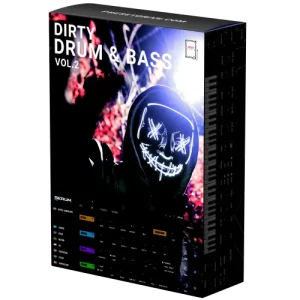
Dirty Drum & Bass Vol.2
Filthy bass presets for dubstep and riddim. Growls, wobbles, and screeches.
£29.99
Shop Now →Not sure yet? Grab our free taster pack first.


