Every Serum producer faces this question at some point. Should you buy a preset pack or spend the time learning to build every sound from scratch? The answer is not as simple as picking one side. Both approaches have real advantages, and the smartest producers use a mix of both.
The Case for Making Your Own Presets
Building sounds from scratch teaches you things that no tutorial or preset pack ever will. When you start with an init patch and work your way up to a finished sound, you learn how oscillators interact, how filters shape tone, and how modulation brings a sound to life.
That knowledge is invaluable. It means when you hear a sound in a track you like, you have a much better chance of recreating it. It also means you can troubleshoot problems in your mix because you understand what is happening under the hood.
The downside? It takes a long time. Especially when you are starting out, you might spend 3 hours trying to make a Reese bass and end up with something that sounds nothing like what you had in mind. That is 3 hours you could have spent writing, arranging, and finishing a track.
The Case for Using a Serum Preset Pack
A good serum preset pack does more than just give you sounds to use. It gives you a reference point. You can load up a preset, play with the macros, then open the mod matrix and see exactly how the designer achieved that sound.
This is actually one of the best ways to learn sound design. Reverse-engineering well-made presets teaches you techniques you might never discover on your own. It is like having a mentor who left detailed notes on every decision they made.
The practical benefit is obvious too. If you are working on a track and need a specific type of bass, having a preset pack means you can find something close to what you want in seconds, tweak it to fit, and keep your creative momentum going. Inspiration does not wait around while you spend 45 minutes in the wavetable editor.
What to Look for in a Quality Pack
Not every preset pack is worth your money. Here is what separates a good one from a bad one:
- Genre focus. A pack designed for bass music specifically will have sounds that actually work in your productions. Generic packs try to cover everything and end up being average at all of it.
- Mapped macros. Every preset should have useful parameters assigned to the macro knobs. Filter cutoff, distortion amount, stereo width – things you would actually want to tweak during a session.
- Mix-ready levels. Good presets are gain-staged properly so they sit in your mix without clipping or being buried.
- Variety within the genre. You want basses, leads, pads, and FX that all work together but give you different flavours to work with.
The Smart Approach: Use Both
The producers who release the most music tend to use presets as starting points and then customise them. They are not spending 6 hours making a pad from scratch when a preset gets them 80% of the way there in 10 seconds. But they are also not using presets completely untouched, because that risks sounding like everyone else who bought the same pack.
Here is a workflow that works well:
- Start your session by loading presets to find the vibe for your track
- Once you find a sound that works, tweak it until it fits your specific arrangement
- Save your tweaked version as a new preset in your own library
- Over time, you build a personal collection of sounds that are uniquely yours
Try Before You Commit
If you have never used third-party presets before, grab a free preset taster pack and see how it fits into your workflow. Open up the presets, look at how they are built, and try tweaking them into something new.
We have a range of bass music preset packs designed specifically for DnB, dubstep, riddim, and halftime producers. Every preset has mapped macros and is mix-ready out of the box. Use code NIGHTOWL40 for 40% off any pack.
The bottom line: presets are not a shortcut that replaces skill. They are a tool that helps you work faster while you continue developing your sound design abilities. Use them wisely and you will finish more tracks without sacrificing quality.
Ready to level up your sound?
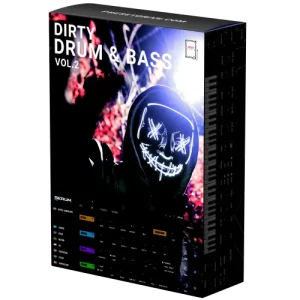
Dirty Drum & Bass Vol.2
Filthy bass presets for dubstep and riddim. Growls, wobbles, and screeches.
£29.99
Shop Now →Not sure yet? Grab our free taster pack first.

