How to Use Sample Packs in Your Music Production
Sample packs are one of the most valuable resources in modern music production. Knowing how to use sample packs effectively can save you hours of work, improve the quality of your tracks, and teach you sound design techniques you might never discover on your own.
This guide covers everything from understanding what is inside a typical pack, to organising your library, loading samples into your DAW, processing sounds, and building complete tracks from one-shot samples and loops.
What Is in a Sample Pack
One-Shot Samples
One-shot samples are single, isolated sounds. A single kick drum hit. A single snare. A single bass note. A single percussion hit. They are called one-shots because the sound plays once from start to finish with no looping. You trigger them in your DAW or sampler and they play the full sound once.
One-shots are the building blocks of a track. You load them into a sampler or place them directly on your DAW timeline and sequence them with MIDI or manual placement. They give you complete control over timing, velocity, pitch, and processing because each hit is isolated.
Common types of one-shot samples found in bass music packs:
- Kicks – Individual kick drum hits in various styles (punchy, deep, sub-heavy, distorted, layered).
- Snares and claps – Snare hits, clap sounds, and layered snare/clap combinations.
- Hi-hats – Open and closed hi-hat hits, sometimes with multiple velocity layers.
- Percussion – Shakers, rides, crashes, toms, rimshots, and other percussion one-shots.
- Bass hits – Single bass notes or stabs, often tuned to C for easy transposition.
- FX – Impact sounds, risers, downlifters, sweeps, and transition effects.
- Vocal chops – Short vocal phrases, ad-libs, or processed vocal hits.
Our bass one-shot packs are specifically designed for bass music producers, with kicks, snares, and bass hits tailored for drum and bass, dubstep, bass house, and UK bass.
Loops
Loops are longer audio files designed to repeat seamlessly. A drum loop might be 4 or 8 bars of a full drum pattern. A bass loop might be a repeating bassline. Loops are usually labelled with their BPM and key so you can match them to your project.
Loops are useful for quickly building up a track structure or for layering with your own elements. Some producers use a drum loop as a starting point and then replace individual hits with their own sounds. Others layer loops underneath their own programming for additional texture and complexity.
MIDI Files
Some sample packs include MIDI files that correspond to the audio loops. These let you load the MIDI pattern into your own synth or sampler and play it with any sound you choose. MIDI files are incredibly valuable because they give you professional patterns and arrangements that you can customise completely.
Presets
Many sample packs include synthesiser presets alongside the audio samples. These might be Serum presets, Massive presets, or presets for other popular synths. Having both the samples and the synth patches that created them gives you maximum flexibility. You can use the rendered audio samples for quick results, or load the presets and tweak them to create your own variations.
For Xfer Serum users producing bass music, our Serum preset packs cover every style from drum and bass to dubstep, bass house, and UK bass. Combine these with our sample packs for a complete production toolkit.
Loading Samples Into Your DAW
Ableton Live
In Ableton Live, you can drag and drop audio files directly from your file browser onto audio tracks or into Simpler/Sampler instruments. To add a sample pack to your Ableton browser for easy access:
- Open the browser panel on the left side of Ableton.
- Under “Places” at the bottom, click “Add Folder.”
- Navigate to your sample pack folder and select it.
- The folder now appears in your browser, and you can search and browse its contents anytime.
For one-shots, drag them onto a MIDI track loaded with Simpler (Ableton’s built-in sampler). Simpler automatically maps the sample across the keyboard so you can trigger it at different pitches with MIDI notes.
FL Studio
In FL Studio, add your sample pack folder to the browser by right-clicking and selecting “Add to Browser.” Drag samples onto the Channel Rack, into the Playlist as audio clips, or into sampler plugins like DirectWave. For one-shot drums, drag directly into the Channel Rack and program patterns in the step sequencer or piano roll.
Using Samplers for One-Shots
For maximum control over one-shot samples, load them into a dedicated sampler plugin. Most DAWs include a built-in sampler (Ableton Simpler/Sampler, FL Studio DirectWave, Logic EXS24/Sampler). Third-party options like Native Instruments Battery or Kontakt also work well.
When loading a one-shot into a sampler:
- Set the root note to C3 (or whatever note the sample is tuned to, usually noted in the filename).
- Set the sample to play in one-shot mode (no looping) so it plays from start to finish regardless of how long you hold the MIDI note.
- Adjust the amplitude envelope if needed. For drum hits, a zero attack and natural decay usually work best. For bass or tonal one-shots, you might want to adjust sustain and release.
- If the sample has a tail (like a reverb or room sound), decide whether you want to keep it or truncate it.
Organising Your Sample Library
Folder Structure
As your sample collection grows, organisation becomes critical. Without a clear system, you will waste time searching for the right kick or snare when you should be making music. Here is a proven folder structure:
- Drums
- Kicks
- Snares
- Claps
- Hi-Hats (Open)
- Hi-Hats (Closed)
- Percussion
- Cymbals
- Toms
- Bass
- Sub Bass
- Mid Bass
- Bass Stabs
- FX
- Risers
- Downlifters
- Impacts
- Sweeps
- Transitions
- Vocals
- Vocal Chops
- Vocal Phrases
- Ad-Libs
- Loops
- Drum Loops
- Bass Loops
- Melodic Loops
Sort samples from each pack into this structure rather than keeping them in their original pack folders. This means when you need a snare, you browse your Snares folder and see every snare from every pack you own in one place.
Naming Conventions
Good file naming saves enormous time. Rename samples with useful information: the type of sound, its character, and optionally its origin pack. For example: “Kick_Heavy_Sub_PackName.wav” or “Snare_Tight_Crack_PackName.wav”. This lets you scan filenames quickly and find what you need.
Processing and Manipulating Samples
Making Samples Your Own
Using samples is a completely legitimate production technique used by professionals across every genre. With proper processing, your samples will sound unique to your tracks. Here are techniques for making sample pack sounds your own:
Pitch shifting: Change the pitch of a sample by a few semitones or even an octave. A snare pitched down 2 semitones has a completely different character. A kick pitched up 3 semitones becomes punchier and tighter.
Time stretching: Stretch or compress the length of a sample. Stretching a short percussion hit creates a unique texture. Compressing a long sample creates a tight, punchy version.
Layering: Combine two or more one-shots to create a new composite sound. Layer a punchy kick with a sub-heavy kick to get the best of both. Layer a crackly snare with a clean clap for a hybrid hit.
EQ and filtering: Shape the frequency content of a sample. High-pass a kick to remove sub content, then layer it with a dedicated sub kick. Low-pass a snare for a darker, muffled character. Band-pass a vocal chop to isolate the mid-range and make it sit differently in the mix.
Saturation and distortion: Add harmonic content to make a sample warmer, grittier, or more aggressive. A clean kick through a tape saturation plugin becomes warmer and punchier. A snare through a bit-crusher becomes lo-fi and gritty.
Reverb and delay: Add space and depth. A dry snare in a room reverb becomes ambient and spacious. A vocal chop through a ping-pong delay becomes a rhythmic textural element.
Resampling
Resampling is the process of recording the output of your processing chain back to a new audio file. Load a sample, process it with plugins, then bounce or render the result to create an entirely new, unique sample that belongs only to you.
For example, take a bass one-shot from a bass one-shot pack, run it through a chain of distortion, filtering, and pitch automation, then render the result. You now have a completely original sound that started with a sample but sounds nothing like the original.
Chopping and Rearranging
Take a loop, chop it into individual hits or phrases, then rearrange the pieces into a new pattern. A 4-bar drum loop can be chopped into 16 or 32 individual slices and rearranged into something completely original. In most DAWs, use the slice function to automatically chop a loop at transient points, then rearrange, pitch, reverse, or delete individual slices.
Building a Track with Sample Packs
Starting with Drums
For most bass music genres, starting with the drum groove is the most effective workflow. Here is a step-by-step approach:
- Select a kick. Choose a kick that matches the style and energy of the track you want to make. For drum and bass, you want a punchy kick with a short tail. For dubstep, a deeper, more sustained kick. For bass house, a tighter, punchier kick with less sub content (the bass handles the sub).
- Add the snare. Place a snare on beats 2 and 4 for most genres, or on the 3 for halftime feels. Layer two snare samples if needed for a fuller sound.
- Program hi-hats. Use closed hi-hat one-shots for the main pattern and open hi-hats for accents. Vary the velocity (volume) of individual hi-hat hits for a more human, groove-oriented feel.
- Add percussion. Shakers, rides, additional claps, and ghost snares fill out the drum pattern. Keep these supporting elements quieter than the main kick, snare, and hats.
- Layer and refine. Once the basic pattern feels right, start swapping individual samples, adjusting timing, and processing each element to taste.
Adding Bass
With the drum groove established, add bass elements. You have two main approaches:
Synth bass with presets: Load a Serum preset from a genre-specific preset pack and write a MIDI bassline. This gives you maximum flexibility to adjust notes, timing, and the preset parameters.
Bass one-shots: Load bass one-shots into a sampler and trigger them with MIDI. One-shots give you consistent, pre-processed bass sounds that you know will sound good. Many producers use one-shot bass samples for stabs, drops, and accent notes while using synth presets for sustained basslines.
For the best results, combine both approaches. Use a synth preset for the main rolling or sustained bassline, and layer bass one-shots on top for impact moments like the start of each bar or the first note of a drop.
FX and Transitions
Sample packs typically include a selection of FX sounds that are essential for creating energy, transitions, and drama in your arrangement:
- Risers before drops and choruses to build tension.
- Downlifters after drops to signal the transition into a breakdown.
- Impact sounds on the first beat of a drop or chorus for maximum punch.
- Sweeps underneath transitions for smooth, professional movement between sections.
- Reverse crashes leading into new sections.
Place FX sounds on a dedicated audio track in your DAW and align them with the arrangement transitions. A riser starting 4 or 8 bars before a drop, an impact hitting on beat 1 of the drop, and a downlifter on the first beat of the breakdown after the drop. This is the standard approach used in professional bass music production.
Genre-Specific Sample Pack Workflows
Drum and Bass
For DnB (170-175 BPM), focus on tight, punchy drum one-shots. The kick and snare are everything in DnB. Use ghost snares and off-beat hi-hats to create the characteristic rolling groove. Layer clean sub bass samples underneath mid-range synth basses for weight. Our drum and bass presets and sample packs are designed to work together for exactly this workflow.
Dubstep
At 140 BPM halftime, dubstep requires deep, impactful drums with plenty of space between hits. Focus on heavy kick and snare one-shots with long, sustained tails. FX samples (risers, impacts, textures) are particularly important in dubstep for building tension before drops. Check our dubstep presets for the bass sounds to pair with your drum samples.
Bass House
Bass house (124-128 BPM) needs tight, groove-focused drums. The kick should be punchy but not sub-heavy (the bass handles the sub). Offbeat open hi-hats are essential. Vocal chops and stabs add the house music energy that distinguishes bass house from other bass genres. Our bass house presets complement drum one-shots perfectly in this style.
UK Bass
UK bass (130-140 BPM) blends garage grooves with heavy bass weight. Use shuffled, swinging drum patterns with garage-influenced hi-hat patterns. Vocal samples and chops are a key part of the UK bass aesthetic. Layer deep sub samples with warped mid-range basses for the signature sound. Browse our UK bass presets for synth sounds that pair with your one-shot selections.
Common Mistakes When Using Sample Packs
Using Samples Without Processing
Dropping raw, unprocessed samples into your track is the fastest way to make your music sound generic. Every producer who bought the same pack has the same raw samples. Your processing is what makes them unique. Always EQ, compress, saturate, or otherwise process your samples to fit your mix.
Mixing Too Many Packs at Once
Using one kick from pack A, a snare from pack B, hats from pack C, and percussion from pack D can result in a drum kit that feels sonically inconsistent. The samples were not designed to work together. If you mix across packs, spend extra time processing each sample so they share a cohesive sonic character (similar reverb space, consistent saturation level, complementary EQ curves).
Ignoring Key and Tempo Information
Loops and tonal one-shots are usually labelled with their key and BPM. Ignoring this information and dropping a loop in the wrong key or tempo will sound terrible. Always match loops to your project BPM and transpose tonal samples to fit your track’s key.
Hoarding Without Using
A small, well-organised collection of quality samples you know intimately is more useful than a massive library you never browse. Focus on a few high-quality packs, learn every sound in them, and use them consistently.
Are Sample Packs Worth It
Yes. Professional producers across every genre use sample packs. The goal is to make great music, not to synthesise every sound from scratch. Using high-quality one-shots and loops frees you to focus on arrangement, composition, mixing, and emotional impact. Choose packs that match your style, process every sample to fit your mix, and expand your collection as your skills develop.
For bass music producers working in drum and bass, dubstep, bass house, and UK bass, our complete range of sample packs and bass one-shots are designed specifically for these genres. Combined with our Serum preset collection, you have everything you need to produce professional-quality bass music. And if you want the best value, our preset bundles package multiple packs together at a significant discount.
New to Serum? Start with our guide on how to install Serum presets to get your preset library set up and ready to use alongside your sample collection.
Related Preset Packs
Looking for professional bass music presets? Check out these Serum preset packs:
Ready to level up your sound?
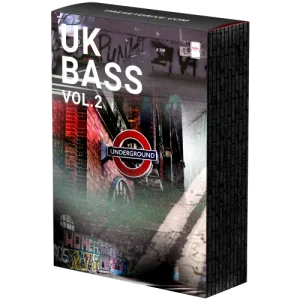
UK Bass Vol.2
Authentic UK bass presets. Garage, bassline, and 2-step sounds for Serum.
£29.99
Shop Now →Not sure yet? Grab our free taster pack first.
