What Is Neurofunk
Neurofunk is the most technically demanding subgenre of drum and bass. It is defined by complex, evolving bass sounds that morph, growl, and mutate across multiple frequencies simultaneously. Artists like Noisia, Mefjus, Phace, and Current Value have pushed the boundaries of what bass can sound like, turning it into an art form that combines synthesis, processing, and automation into constantly shifting sonic textures.
The neurofunk bass sound is not a single preset. It is a combination of advanced Serum programming, external processing, resampling, and detailed automation. If you are coming from simpler bass genres, neurofunk will challenge everything you know about sound design. But the results are worth the effort.
Advanced Oscillator Techniques
Wavetable Selection and Morphing
Neurofunk basses rely on complex, harmonically rich wavetables. Basic saw and square waves are starting points, but the real character comes from custom or unusual wavetables. In Serum, try tables like “Distortion”, “Monster”, or “Analog_Misc”. Better yet, import your own custom wavetables created from resampled audio.
Automate the wavetable position throughout your bass pattern. Even a slow, subtle sweep across the wavetable creates evolving tonal movement that keeps the bass interesting over time. Map the wavetable position to a macro knob so you can experiment quickly with different automation curves.
FM Synthesis for Metallic Textures
FM (frequency modulation) is essential for neurofunk bass. Enable FM from Oscillator B to Oscillator A and set the FM depth to about 20 to 40 percent. This adds inharmonic partials and metallic textures that give the bass its aggressive, technical character.
The FM amount should not be static. Automate it to create timbral shifts within each note. A bass that starts clean and gradually becomes more FM-distorted over the course of a beat creates movement and interest. Map FM depth to an envelope or LFO for automatic variation.
Filter and Modulation Design
Multi-Filter Routing
Neurofunk often uses both of Serum filters simultaneously in a serial or parallel configuration. Try Filter 1 as a low-pass handling the sub and low-mid content, with Filter 2 as a band-pass or comb filter adding resonant character to the mid-range. Route each oscillator through different filters for independent tonal control.
The comb filter in Serum is particularly useful for neurofunk. It creates a metallic, flanger-like resonance that adds harmonic complexity. Automate the comb filter frequency with an LFO at a slow rate for a sweeping, evolving quality.
LFO and Envelope Strategies
Use multiple LFOs at different rates assigned to different parameters. LFO 1 might control filter cutoff at 1/4 note rate, while LFO 2 modulates wavetable position at 1/2 note rate, and LFO 3 handles FM depth at a free-running rate. These overlapping modulation sources create constantly changing, non-repeating textures.
Custom LFO shapes are a neurofunk essential. Draw your own LFO curves in Serum rather than using basic sine or saw shapes. Sharp spikes, plateaus, and irregular curves create unexpected modulation patterns that sound more organic and less mechanical.
Resampling Workflow
Resampling is the process of recording your Serum output as audio, then processing and re-importing it. This is fundamental to neurofunk production. Design a bass sound in Serum, record a long sustained note, then chop, reverse, stretch, pitch-shift, and process the audio in your DAW.
Apply external effects like guitar amp simulators, frequency shifters, and granular processors to the resampled audio. These add characteristics that Serum alone cannot create. After processing, drag the audio back into Serum as a custom wavetable and you have a completely unique sound source.
Repeat this process multiple times. The best neurofunk basses are often the result of 3 to 5 resampling generations, each adding new characteristics and complexity. It is time-consuming but creates sounds that are truly one of a kind.
Start your neurofunk sound design journey with the bass presets in the Preset Drive collection, which provide excellent starting points for resampling experiments.
Processing and Effects
Distortion Stacking
Layer multiple distortion types in series. Start with a waveshaper or bitcrusher for digital grit, follow with tube saturation for warmth, and finish with a soft clipper to control peaks. Each stage adds different harmonic content, and the order matters significantly. Experiment with rearranging your distortion chain for different results.
Multiband Processing
Split your bass into 3 or 4 frequency bands and process each independently. The sub band (below 100 Hz) should be clean and compressed. The low-mid band (100-500 Hz) can have moderate distortion and movement. The upper-mid band (500 Hz to 2 kHz) is where the neurofunk character lives, so apply your most aggressive processing here. The high band (above 2 kHz) adds presence and air.
This multiband approach gives you surgical control over the tonal balance while allowing extreme processing on specific frequency ranges without destroying the overall sound.
Download the free Serum taster pack to study how professional bass presets handle frequency distribution and processing.
Take Your Neuro Bass to the Next Level
Neurofunk bass design is a deep rabbit hole that rewards patience, experimentation, and technical knowledge. Master the fundamentals of FM synthesis, multi-filter routing, and resampling, and you will have the tools to create sounds that stand alongside the genre legends. Explore advanced bass presets at Preset Drive and push your sound design further.
‘trace’ => ‘
#0: Elementor\Core\Logger\Manager -> shutdown()
‘,
)]
For a complete overview of neuro bass sounds and preset recommendations, see our Neuro Bass Serum Presets guide.
Ready to level up your sound?
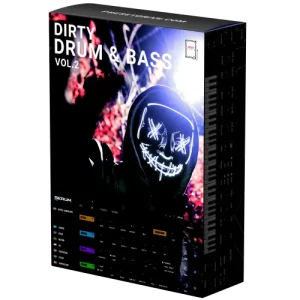
Dirty Drum & Bass Vol.2
Complex neuro bass presets with heavy modulation and processing.
£29.99
Shop Now →Not sure yet? Grab our free taster pack first.
