

What Is Reference Track Mixing and Why It Works
Reference track mixing is the practice of comparing your work-in-progress against professionally released tracks in the same genre. It is one of the most powerful production techniques available, and it is completely free. No plugin purchase required. No fancy gear needed. Just a professional track loaded into your DAW alongside your own.
The reason reference mixing works so well is that our ears adapt quickly. After 30 minutes of working on a track, you lose perspective on how it actually sounds. A reference track resets your ears and gives you an objective comparison point. Is your kick too quiet? Are your mids too harsh? Is your stereo image too narrow? A reference track answers all these questions instantly.
How to Choose the Right Reference Tracks
Match the Genre and Energy
Pick reference tracks that are in the same genre and have a similar energy level to what you are making. If you are producing a heavy dubstep track, do not reference against a liquid DnB tune. The mixing decisions are completely different. Find 2-3 tracks that represent the sound you are aiming for.
Choose tracks from established artists whose mixes you admire. Look for tracks that have been released on reputable labels, as these will have been professionally mixed and mastered. These are the benchmarks you want to measure against.
Use Multiple References
Do not rely on a single reference track. Different tracks excel in different areas. One might have a perfect low end, another might have incredible stereo width, and a third might have the exact vocal processing you want. Use each reference for the specific element it does best.
Setting Up Reference Tracks in Your DAW
Level Matching
This is the most important step and the one most producers skip. Professional tracks are mastered louder than your work-in-progress. If you do not level match, the reference will always sound better simply because it is louder. Our brains perceive louder as better, which skews your judgement.
Use a gain plugin or utility to turn down the reference track until it matches the perceived loudness of your mix. A LUFS meter can help you match levels accurately. Aim for the same integrated LUFS reading on both tracks.
Routing and Bypassing
Route your reference track directly to the master output, bypassing your master chain. You want to hear the reference without your own processing affecting it. Most DAWs let you route tracks directly to the hardware output, skipping the master bus entirely.
Set up a keyboard shortcut or macro to quickly switch between your mix and the reference. The faster you can A/B compare, the more useful the reference becomes.
What to Listen For
Frequency Balance
Compare the overall tonal balance. Is your mix brighter or darker than the reference? Is there more or less energy in the sub frequencies? Use a spectrum analyser alongside your ears to visualise the differences. Focus on the relationship between frequency ranges rather than absolute levels.
Dynamics and Loudness
Pay attention to how dynamic the reference is compared to your mix. Does the reference have more punch and transient detail? Is it more compressed and consistent? The dynamic profile of your mix should match the genre expectations set by your reference.
Stereo Image
Notice how wide the reference sounds compared to your mix. Where are the elements placed in the stereo field? Bass music typically has a mono or near-mono low end with wide mid and high-frequency content. Use a stereo visualiser to compare.
Arrangement and Space
Beyond mixing, reference tracks teach you about arrangement. How much space is between elements? How dense is the mix during the drop versus the breakdown? How long is the intro? Professional tracks in your genre set the template for arrangement expectations.
Common Mistakes When Using Reference Tracks
The biggest mistake is trying to make your track sound identical to the reference. That is not the goal. The reference is a guide, not a target. Your track should have its own character and identity. Use the reference to check that you are in the right ballpark, not to clone someone else sound.
Another mistake is referencing too often. Check your reference at key decision points (after EQing the bass, after balancing the drums, after the final mix). Constant switching disrupts your creative flow. Find the balance between informed mixing and obsessive comparison.
Producers who use reference tracks consistently make faster progress than those who mix in isolation. Combine this technique with high-quality starting sounds from our preset collections and you will be producing professional-sounding bass music in no time.
Put This Into Practice Today
Next time you sit down to produce, load a reference track before you even start. Let it guide your sound selection, mixing decisions, and arrangement choices. This single habit will accelerate your growth as a producer more than any plugin or piece of gear.
Need professional-quality sounds to get started? Grab our free Serum taster pack and hear how well-designed presets compare against your reference tracks right out of the box.
Ready to level up your sound?
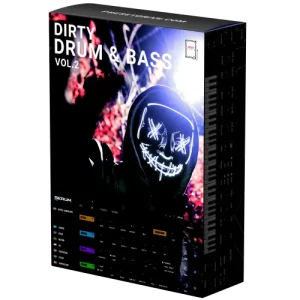
Dirty Drum & Bass Vol.2
Professional DnB presets for Serum. Reeses, neuro basses, subs, and more.
£29.99
Shop Now →Not sure yet? Grab our free taster pack first.
