Macros are one of the most powerful features in Xfer Serum, but they are also one of the most underused. If you have ever downloaded a preset pack and noticed those four knobs at the bottom of the interface labelled Macro 1 through Macro 4, you have already seen them in action. But understanding how to assign, configure and creatively use macros will completely change how you work with Serum.
Whether you are designing your own patches from scratch, tweaking presets for your tracks, or performing live, macros give you real-time control over multiple parameters at once. This guide covers everything you need to know about Serum macros, from the basics of assignment all the way through to advanced sound design strategies for bass music production.
What Are Macros in Serum
Macros are four assignable knobs that sit at the bottom of Serum’s interface. Each macro can control multiple parameters simultaneously. When you turn one macro knob, it can adjust the filter cutoff, wavetable position, distortion amount, reverb mix and anything else you have mapped to it, all at the same time.
Think of macros as a master control panel for your patch. Instead of reaching for six different knobs to morph your sound from clean to aggressive, you assign all six parameters to a single macro and control the entire transformation with one movement.
This is what separates a basic preset from a professional one. Good preset designers map their macros thoughtfully so that each knob gives you meaningful, musical control over the sound. When you load a well-designed preset, the macros should let you reshape the tone, intensity and character without diving into the synthesis engine.
How to Assign Macros
Assigning macros in Serum is straightforward once you know where to look.
Basic Assignment
- Right-click on any parameter you want to control. This could be a filter cutoff, an oscillator level, a wavetable position, an effect amount, or virtually any knob or slider in Serum.
- From the context menu, hover over Assign Macro.
- Select Macro 1, Macro 2, Macro 3, or Macro 4.
- The parameter is now linked to that macro. Turning the macro knob will adjust the parameter.
Setting the Range
After assigning a macro, you need to set the modulation range. This determines how much the macro affects the parameter.
- After assignment, a blue indicator appears on the parameter showing the modulation range.
- Drag this indicator to set the maximum value the macro will reach when turned fully clockwise.
- The parameter’s current position acts as the minimum value (when the macro is at zero).
- You can set negative ranges too, meaning the parameter decreases as the macro increases.
Multiple Assignments
The real power comes from assigning multiple parameters to a single macro. There is no limit to how many parameters you can assign to one macro knob. You might have Macro 1 controlling:
- Filter cutoff (increasing from 200Hz to 8kHz)
- Distortion drive (increasing from 0% to 60%)
- Reverb mix (decreasing from 30% to 0%)
- Wavetable position (scanning from position 10 to position 200)
With this setup, turning Macro 1 from zero to full takes your sound from a dark, reverb-heavy pad to a bright, distorted, dry lead. One knob, four changes, completely different character.
Renaming Your Macros
Do not leave your macros labelled “Macro 1” through “Macro 4”. Serum lets you rename them so that anyone using the preset knows exactly what each knob does.
To rename a macro, right-click on the macro name text at the bottom of the interface and select Rename Macro. Give it a descriptive name like “Grit”, “Movement”, “Brightness” or “Space”. This small step makes a huge difference in usability, especially if you are sharing presets or building a preset pack.
Creative Macro Uses for Bass Sound Design
Now for the fun part. Here are specific macro mapping strategies that work brilliantly for drum and bass, dubstep, bassline and other bass-heavy genres.
The “Aggression” Macro
This is probably the most common and most useful macro for bass music. Map it to control:
- Distortion drive – increasing from subtle saturation to heavy distortion
- Filter cutoff – opening up to let more harmonics through
- FM synthesis amount – adding metallic harmonic complexity
- Compressor ratio in the FX chain – tightening the dynamics as the sound gets more aggressive
At zero, you get a clean, smooth bass. At full, you get a face-melting growl. This is perfect for neurofunk and dubstep patches where you want the producer to dial in exactly how aggressive the sound sits in their mix.
The “Movement” Macro
Controlling the speed and depth of modulation is essential for keeping bass sounds interesting across a 32-bar section. Map this to:
- LFO rate – speeding up the modulation
- LFO depth on filter or wavetable position – increasing the amount of timbral change
- Chorus rate and depth – adding stereo movement
This lets you go from a static, predictable bass at zero to a fast, evolving, constantly shifting sound at full. Incredibly useful for keeping energy high in drops without needing to automate individual parameters.
The “Tone” Macro
Simple but effective. This macro shifts the overall tonal character of the patch:
- Wavetable position on Oscillator A – scanning through different harmonic profiles
- Filter cutoff – brightening or darkening
- EQ band gain in the FX section – boosting or cutting specific frequency ranges
This gives producers the ability to shape the sound to fit their specific mix without touching the synthesis engine. A darker mix might need the tone macro at 30%. A brighter, more energetic track might want it at 70%.
The “Space” Macro
Controlling the spatial characteristics of a sound:
- Reverb mix and decay – from dry to atmospheric
- Delay mix and feedback – adding rhythmic echoes
- Stereo width via the Hyper/Detune controls – narrowing or widening
- High frequency roll-off – darker sounds feel further away
This is particularly useful for liquid drum and bass and atmospheric bass music where you want to push sounds back in the mix or bring them right up front.
Using Macros for Live Performance and DJ Sets
Macros are not just for studio production. They are incredibly powerful for live electronic music performance. If you are using Serum in a live context, whether through Ableton Live, a hardware controller, or a hybrid setup, macros become your performance interface.
MIDI Mapping Macros to Hardware
Serum’s macros can be MIDI-mapped to any hardware controller. In your DAW:
- Enter MIDI learn mode (in Ableton, click the MIDI button in the top right).
- Click on a Serum macro knob.
- Move the physical knob or fader on your controller.
- The mapping is created. Now your hardware directly controls the macro.
This means you can map all four Serum macros to four knobs on a Novation Launch Control, an Akai APC, or any MIDI controller. You now have hands-on control over complex sound transformations while performing.
Performance Macro Strategies
For live performance, think about macros differently than for studio use. You want dramatic, obvious changes that translate to an audience:
- Macro 1 – “Build”: Map to filter cutoff, reverb and distortion. Sweep it up during builds to create tension before a drop.
- Macro 2 – “Destroy”: Map to bitcrusher, distortion and pitch. Crank it for breakdowns and transitions.
- Macro 3 – “Width”: Map to stereo spread and chorus. Pull sounds wide for impact moments, narrow them for tension.
- Macro 4 – “Filter”: A simple but essential DJ-style filter sweep across the full frequency range.
Macro Mapping Strategies for Preset Packs
If you are building presets for others, whether for a preset pack or for collaborators, your macro mapping strategy matters enormously. It is the difference between a preset that gets used once and forgotten, and one that becomes a go-to sound in someone’s production workflow.
Consistency Across a Pack
Keep your macro assignments consistent across all presets in a pack. If Macro 1 is “Tone” on one preset, it should be “Tone” on every preset. This lets producers switch between presets during a session without having to relearn what each knob does.
A good standard layout for bass music presets:
- Macro 1: Tone or Character (timbral changes)
- Macro 2: Movement or Modulation (LFO depth and rate)
- Macro 3: Aggression or Drive (distortion and harmonic content)
- Macro 4: Space or FX (reverb, delay, width)
Range Matters
Do not make your macro ranges too extreme. A macro that goes from a gentle pad to a screaming noise is not useful. Every position on the macro should produce a usable, musical result. The sweet spot is a range where turning the macro from 0 to 100 gives you noticeably different sounds that all work in a mix.
Default Positions
Set the default macro positions to where the preset sounds best. Not at zero and not at full. Most macros should default somewhere in the middle range, giving the producer room to go in either direction. The preset should sound great the moment it loads, with macros offering refinement and variation from that starting point.
Advanced Macro Techniques
Inverse Mapping
Not every parameter needs to increase when the macro goes up. Inverse mapping is when you set a negative modulation amount, so the parameter decreases as the macro increases. This is useful for creating natural-sounding transitions. For example, as distortion increases (macro goes up), you might want the wet reverb signal to decrease (less reverb on a distorted sound prevents muddiness).
Macro-Controlled LFO Depth
Instead of mapping a macro directly to a parameter, map it to an LFO’s depth. This means the macro controls how much the LFO affects the parameter, not the parameter value itself. At macro zero, the LFO has no effect. At macro full, the LFO is fully engaged. This gives you a “modulation intensity” control that is incredibly musical.
Using Macros with Velocity
Combine macro modulation with velocity sensitivity for expressive patches. Map velocity to affect similar parameters as a macro, but in a complementary way. The macro sets the overall character while velocity adds per-note expression. This is especially powerful for melodic bass sounds and lead patches.
Macro Automation in Your DAW
You can automate Serum macros in your DAW just like any other parameter. This opens up possibilities that go beyond what a single knob turn can achieve:
- Automate the “Aggression” macro to build gradually over 16 bars leading into a drop.
- Draw in sharp macro changes on specific beats for glitch-style effects.
- Use slow, sweeping automation curves on the “Tone” macro to evolve the sound across an entire track section.
- Combine macro automation with sidechain compression for pumping, rhythmic transformations.
Why Macros Matter When Choosing Presets
When you are shopping for preset packs, the quality of macro mapping is one of the clearest indicators of overall preset quality. A preset designer who has taken the time to carefully assign, range and label all four macros has almost certainly put equal care into the sound design itself.
Presets with well-mapped macros are more versatile. Instead of loading a preset and finding it almost-but-not-quite right for your track, you can use the macros to dial it in perfectly. That single preset becomes ten different usable sounds depending on where the macros are set.
This is why professional preset packs for bass music always include macro assignments. They are not just presets. They are playable instruments with real-time controls that let you shape the sound to your specific track, your specific mix, and your specific style.
Get Presets with Professional Macro Mapping
Every Serum preset pack on Preset Drive comes with carefully mapped macros across all four knobs, giving you instant hands-on control over tone, movement, aggression and space. Whether you produce drum and bass, dubstep, bassline or any other bass-heavy genre, these presets are designed to be tweaked and performed, not just loaded and left static.
- Drum and Bass Serum Presets – neurofunk growls, liquid basses and reese patches with full macro control.
- UK Bass Serum Presets – wobbly basslines and garage-influenced patches with performance-ready macros.
- Bass House Serum Presets – heavy, distorted bass presets with aggression and tone macros mapped for instant tweaking.
- Preset Bundles – grab multiple packs at a discount and build a full library of macro-mapped sounds.
Related Preset Packs
Looking for professional bass music presets? Check out these Serum preset packs:
Ready to level up your sound?
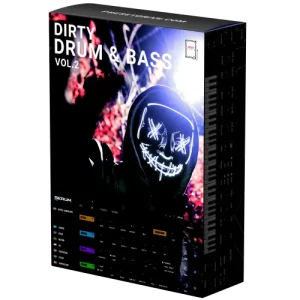
Dirty Drum & Bass Vol.2
Professional DnB presets for Serum. Reeses, neuro basses, subs, and more.
£29.99
Shop Now →Not sure yet? Grab our free taster pack first.

