
Rave Music is Back and Bigger Than Ever
Rave music has made a massive comeback. From the resurgence of classic breakbeat and acid house to the explosive growth of modern genres like speed garage, hard house, and UK hardcore, rave culture is alive and thriving in 2026. Festivals are getting bigger, underground events are packed, and a new generation of producers is discovering the raw energy of rave.
Making rave music is about capturing a feeling. The pounding kicks, the euphoric synth stabs, the rolling breakbeats, and the relentless energy that keeps a dance floor moving all night. If you want to create tracks that work in these environments, you need to understand both the production techniques and the culture behind them.
This guide covers everything from choosing the right sounds and tempos to arrangement tips and sound design techniques that will help you create authentic rave tracks in 2026.
Choosing Your Rave Subgenre
Classic Rave and Breakbeat
Classic rave sits at around 130-145 BPM and features chopped breakbeats, big piano stabs, and euphoric vocal samples. Think early 90s warehouse vibes. The drums are sampled from funk and soul records, chopped up and rearranged into driving patterns. Amen breaks, Think breaks, and Funky Drummer loops are the foundation of this style.
Hard House and Hard Dance
If you lean towards harder, more driving sounds, hard house operates at 150-160 BPM with pounding four-to-the-floor kicks, aggressive acid basslines, and relentless energy. This style has seen a huge revival with events like Harder Styles nights drawing massive crowds.
Speed Garage and Bassline
Speed garage and UK bassline combine garage rhythms with heavy bass and rave energy. Tempos sit around 130-140 BPM with shuffled, swung beats and deep, wobbling sub bass. Organ stabs and chopped vocal hooks are signature elements that give these tracks their infectious groove.
Essential Production Techniques
Drum Programming for Rave
Rave drums need to hit hard and drive the track forward. For breakbeat-based styles, start with a classic break sample and chop it into individual hits. Rearrange these hits into new patterns, adding rolls, fills, and variations. Layer additional kicks, snares, and hi-hats on top for extra punch.
For four-to-the-floor styles, your kick drum is the most important element. Use a punchy, full-bodied kick with plenty of low-end weight. Layer a click or transient on top for cut-through. Program your hi-hats with open and closed variations, adding swing or shuffle to create groove.
Synth Stabs and Chords
The classic rave stab is a bright, punchy chord hit that cuts through the mix. In Serum, create this by stacking a saw wave with a square wave, adding a short amplitude envelope (fast attack, short decay, no sustain), and applying a bandpass or high-pass filter. Add a touch of reverb and you have an instant rave stab.
For more modern productions, try layering multiple stab sounds at different octaves and with different tonal characters. Automate filter cutoffs to create builds and breakdowns. Use sidechain compression to make the stabs pump against the kick drum.
Acid Bass and 303 Lines
The Roland TB-303 bass line is synonymous with rave music. While the original hardware is rare and expensive, Serum can create convincing acid bass sounds. Start with a saw wave, apply a low-pass filter with high resonance, and use a short, snappy envelope to control the filter cutoff. Slide between notes for that characteristic squelchy movement.
Sound Design Tips for Rave Producers
Rave music benefits from sounds that are bold and immediate. Do not overthink your sound design. A lot of classic rave tracks used fairly simple sounds played with infectious energy and smart arrangement. The vibe matters more than the complexity of individual sounds.
That said, modern rave production does use more advanced techniques. FM synthesis for metallic stabs, granular processing for evolving textures, and creative resampling for unique drum sounds can all elevate your tracks. The key is using these tools to serve the energy of the track, not to show off technical ability.
Having a collection of rave-ready presets saves you from building every sound from scratch. The Preset Drive shop has Serum preset packs that include stabs, basses, leads, and FX sounds perfect for rave production. Each preset gives you a starting point you can customize to fit your vision.
Arrangement and Energy Management
Rave tracks need to maintain energy while keeping the listener engaged. A common structure is a 32-bar intro building tension, a drop that releases all that energy, a breakdown that provides contrast, and a second drop that hits even harder. Use filter sweeps, riser FX, and drum fills to build tension before drops.
The key to great rave arrangement is contrast. Your drops hit harder when the breakdown is stripped back. Your stabs feel more impactful when there is space around them. Do not fill every gap in your arrangement. Let the music breathe and the dance floor will respond.
Download our Free Serum Taster Pack and start experimenting with rave-ready sounds today.
Ready to make rave music that moves dance floors? Head to the Preset Drive shop for Serum presets designed for high-energy production. Get the sounds, make the tracks, and bring the rave.
Ready to level up your sound?
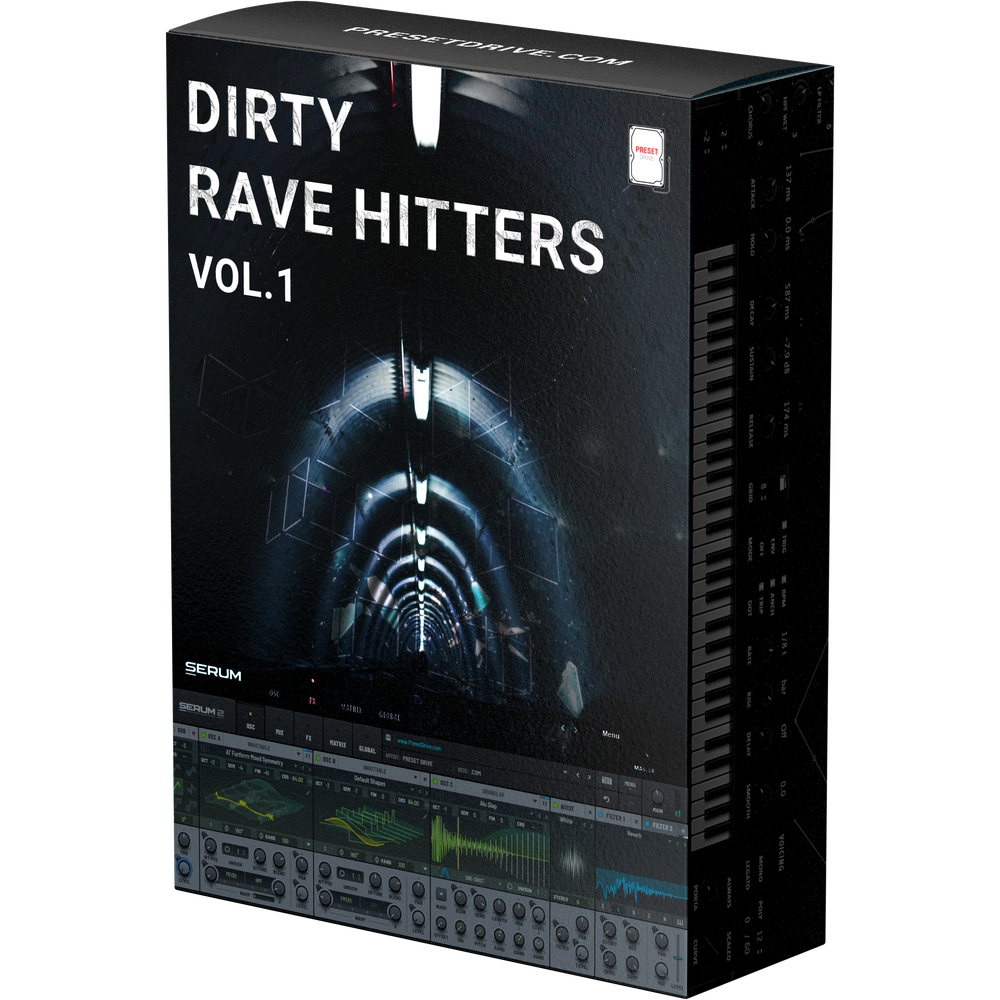
Dirty Rave Hitters Vol.1
Hard-hitting rave presets designed for maximum dancefloor impact.
£29.99
Shop Now →Not sure yet? Grab our free taster pack first.

