The growl bass is one of the most iconic sounds in bass music. That aggressive, snarling, constantly moving mid-range bass that defines neurofunk, dubstep and modern DNB. It sounds complex and intimidating, but once you understand the building blocks, you can create your own growl basses in Serum from scratch.
This tutorial walks through every step of designing a growl bass in Serum. We will cover wavetable selection, FM synthesis, filter routing, distortion, LFO modulation and processing. By the end, you will have a clear process for building growls that actually sound good in a mix.
What Makes a Bass “Growl”
A growl bass gets its character from rapid timbral changes in the mid-range frequencies. The tone shifts and morphs constantly, creating the impression of something alive and aggressive. Think of it like a distorted guitar tone that is being filtered and modulated in real time.
The key ingredients are:
- Rich harmonic content from wavetables or FM synthesis
- Filter modulation that opens and closes the tone rhythmically
- Distortion that adds grit and edge
- LFO movement that keeps the timbre shifting and evolving
Without modulation, you just have a static distorted bass. The movement is what turns it into a growl.
Step 1 – Wavetable Selection
The wavetable you choose sets the starting character of your growl. Different wavetables produce different timbral qualities when modulated.
Good Wavetables for Growls
- Analog category: “Analog_BD_Sin” and “Analog_Saws” provide warm, rich harmonics that respond well to FM synthesis. These are solid starting points.
- Digital category: “Dist_Grit” and “Digital_Carbon” have more aggressive, metallic characteristics out of the box. Good for harsher growls.
- Spectral category: “SpectralFM” and similar wavetables contain complex harmonic relationships that create interesting textures when modulated.
- Basic Shapes: Do not overlook simple wavetables. A basic sawtooth with heavy FM modulation can produce incredible growls. Sometimes simpler starting points give you more control over the final character.
Wavetable Position
Do not leave the wavetable position at the start. Scroll through the wavetable by turning the WT POS knob and listen to how the tone changes at different positions. Many wavetables have sweet spots in the middle or toward the end where the harmonics are more complex and interesting.
The wavetable position is also something you will modulate with an LFO later, so it helps to understand the full range of tones available across the wavetable.
Step 2 – FM Synthesis for Growls
FM synthesis is the secret weapon for growl bass design. It generates complex harmonic content that would be impossible to achieve with wavetables alone.
Setting Up FM
- In Oscillator A, load your chosen wavetable.
- In Oscillator B, load a simple waveform. A sine wave is the classic choice. Triangle and square waves also work and produce different FM characteristics.
- On Oscillator A, find the FM from B control. This is usually in the oscillator settings accessed by clicking on the oscillator section.
- Turn up the FM amount gradually. Start around 10-15% and increase slowly.
How FM Amount Affects the Sound
- 0-15%: Subtle harmonic enrichment. The tone gets slightly more complex but stays smooth.
- 15-40%: Noticeable metallic harmonics appear. The sound starts getting aggressive and interesting. This is the sweet spot for many growl patches.
- 40-70%: Heavy harmonic content. The tone becomes harsh and complex. Good for aggressive neurofunk growls.
- 70-100%: Very aggressive, approaching noise territory. Useful for screeches and effects but can be too much for a musical bass sound.
Oscillator B Tuning
The pitch relationship between Oscillator A and Oscillator B dramatically affects the FM character. Here are some starting points:
- Same pitch (unison): Warm, organ-like FM tones.
- One octave up (+12 semitones): Brighter, more defined harmonics. A common choice for growls.
- Fifth up (+7 semitones): Creates bell-like, slightly dissonant harmonics.
- Non-musical intervals (+5, +10, +17): Creates more complex, metallic, inharmonic content. Experiment freely here.
Try detuning Oscillator B by small amounts (a few cents up or down from a round interval). This creates beating and movement in the FM harmonics that adds organic character to the growl.
Step 3 – Using the Noise Oscillator
Serum’s noise oscillator adds texture and character that neither wavetables nor FM can provide on their own. For growl basses, it adds a layer of grit and realism.
Setup
- Turn on the Noise Oscillator by clicking its on/off button.
- Choose a noise type. “BL Rumble” adds low-frequency texture. “Bright White” adds high-frequency sizzle. “BL static” adds digital crunch.
- Set the noise level low, around 10-25%. It should add character, not dominate the sound.
- Route the noise through a band-pass filter to control which frequencies the noise affects. A band-pass centred around 1-3 kHz adds mid-range grit. Centre it around 5-8 kHz for high-end sizzle.
Noise Modulation
Assign an LFO to the noise filter cutoff so the texture moves and breathes with the rest of the patch. Use the same LFO rate as your main filter modulation so everything stays in sync, or use a different rate for more complex rhythmic interaction.
Step 4 – Filter Routing
The filter is where your growl really takes shape. How you route and modulate the filter determines the rhythmic character and aggression of the sound.
Filter Type
For growl basses, these filter types work best:
- Low-pass (MG style): The classic choice. Warm, smooth resonance. Cuts the harsh highs and lets the mids through. Good for smoother, rounder growls.
- Low-pass (Rough): More aggressive resonance character. Adds a biting quality to the filter sweep.
- Band-pass: Isolates a narrow frequency band and sweeps it. Creates more dramatic, vocal-like growl effects. Excellent for mid-range focused patches.
- Comb filter: Creates metallic, resonant peaks that produce unique growl textures. Not a typical first choice, but worth experimenting with.
Cutoff and Resonance
Set the initial filter cutoff around 500 Hz to 2 kHz. This is the range where most of the growl character lives. Resonance adds a peak at the cutoff frequency that emphasises the filter’s movement. Start around 20-40% resonance. Too much resonance creates a whistling, self-oscillating tone that sounds unnatural (unless that is what you are going for).
Filter Routing Options
Serum lets you route oscillators to different filters or the same filter. For growl basses:
- Both oscillators through Filter 1: Simple setup. Everything gets filtered together. The growl has a unified character.
- Serial routing (OSC A > Filter 1, then Filter 1 > Filter 2): Two filters in series. Use Filter 1 as a low-pass to shape the tone, then Filter 2 as a band-pass for movement. This gives you more sculpting options.
- Parallel routing: Each oscillator through a different filter. Blend the filtered signals together. This creates more complex results because each oscillator is processed independently.
Step 5 – Distortion Types
Distortion is what gives your growl its aggression and edge. Serum offers multiple distortion modes, each with a different character.
Best Distortion Modes for Growls
- Tube: Warm, saturated distortion. Adds fullness and grit without sounding harsh. Good for smoother, rounder growls. Keep the drive moderate (30-50%).
- Warm Tube: Similar to Tube but with more low-end warmth. Excellent for bass-heavy growl patches where you want weight without harshness.
- Hard Clip: Aggressive, sharp distortion. Flattens the waveform peaks for a harsh, in-your-face tone. Use this for aggressive neurofunk and dubstep growls.
- Sine Fold: Creates complex harmonic content by folding the waveform. Sounds unique and metallic. Pairs well with FM synthesis for extreme textures.
- Downsample: Reduces the sample rate for a lo-fi, digital crunch. Adds aliasing artefacts that some producers love for aggressive, dirty growls.
- Diode: Asymmetric distortion that adds odd harmonics. Creates a gritty, buzzy quality.
Distortion Placement
Where you put the distortion in the signal chain matters:
- Before the filter: The distortion generates harmonics, then the filter shapes them. This gives you more control because you can filter out unwanted harshness after distortion.
- After the filter: The filtered signal gets distorted. This tends to sound rawer and more aggressive because the distortion acts on the final shaped tone.
- In the FX rack: Serum’s FX rack distortion comes after everything else. Use this for final-stage grit and loudness.
For most growl patches, try distortion in the FX rack first. If you want more control, use the filter-to-distortion routing in the oscillator/filter section.
Step 6 – LFO Modulation for Movement
This is where your static bass becomes a living, breathing growl. LFO modulation is the most important part of growl bass design.
Essential Modulation Targets
- Filter Cutoff (most important): Assign LFO 1 to the filter cutoff. Use a rate of 1/8 or 1/16 note for rhythmic movement. The LFO opens and closes the filter, creating the rhythmic “wah-wah” effect that defines a growl. Adjust the modulation depth until the filter movement sounds musical and not excessive.
- Wavetable Position: Assign LFO 2 to the WT POS of Oscillator A. Use a slower rate (1/4 or 1/2 note) so the timbral changes are gradual and evolving rather than rapid. This creates the impression that the growl is constantly changing character.
- FM Amount: Assign an LFO to the FM from B control. Even subtle modulation of the FM depth creates dramatic timbral shifts. The harmonics swell and recede, adding organic complexity.
- Distortion Drive: Modulate the distortion amount so the growl goes from gritty to aggressive and back. This adds dynamics and prevents the sound from feeling one-dimensional.
Custom LFO Shapes
Do not rely on basic sine and saw LFO shapes. Serum lets you draw custom LFO waveforms, and this is where advanced growl design happens.
- Stepped shapes: Create abrupt timbral changes. The growl jumps between different characters rather than smoothly transitioning.
- Ramp up, sharp drop: Builds intensity then resets. Creates a stuttering, aggressive rhythmic pattern.
- Multi-stage shapes: Combine fast and slow sections within one LFO cycle. The growl moves quickly during some parts and slowly during others, creating complex rhythmic interest.
- Random/S&H: Sample and hold LFO shapes create unpredictable, glitchy timbral changes. Good for fills and effects.
Step 7 – Effects Processing
After your oscillators, filters and modulation are set up, the FX rack adds the final polish and aggression.
Recommended FX Chain for Growls
- Distortion: Additional distortion stage if needed. Can use a different type from the pre-filter distortion for layered grit.
- EQ: Cut any unwanted sub-bass rumble below 80-100 Hz (your sub bass should come from a separate layer). Boost the mid-range aggression around 1-3 kHz. Cut any harsh resonant peaks that build up from the filter and distortion.
- Compressor: Tame the dynamics of the heavily modulated signal. Fast attack, medium release. The compressor ensures the growl maintains a consistent level even as the LFOs create dramatic timbral changes.
- Hyper/Dimension: Adds stereo width. Set the mix low (20-30%) to add subtle width without making the bass too wide. Keep in mind that bass below 150 Hz should stay mono in the final mix.
- Reverb (optional): A tiny amount of short reverb can add depth. Keep the mix very low (5-15%) and the decay short (under 1 second). Too much reverb on a growl bass makes it muddy and unfocused.
Putting It All Together – Complete Patch Walkthrough
Here is a step-by-step recipe for a classic neurofunk growl bass:
- Oscillator A: Load “Analog_BD_Sin” wavetable. Set WT POS to around 40%. Set unison voices to 2 with slight detune (0.10).
- Oscillator B: Load a basic sine wave. Tune up +12 semitones (one octave). Turn on FM from B at 25%.
- Filter 1: MG Low Pass 24dB. Cutoff at 800 Hz. Resonance at 30%.
- LFO 1: Assign to Filter 1 cutoff. Rate 1/8 note, synced. Shape: rising sawtooth. Modulation depth about 40%.
- LFO 2: Assign to Oscillator A WT POS. Rate 1/2 note, synced. Shape: sine. Modulation depth about 50%.
- LFO 3: Assign to FM from B amount. Rate 1/4 note, synced. Shape: triangle. Modulation depth about 25%.
- Noise oscillator: Turn on. Load “BL Rumble”. Level at 15%. Route through a band-pass filter at 2 kHz.
- FX Rack: Distortion (Tube, drive 40%), EQ (high-pass at 100 Hz, slight boost at 2 kHz), Compressor (fast attack, 3:1 ratio).
- Voicing: Set to Mono with glide (portamento time around 50ms). This ensures single-note bass lines with smooth pitch transitions.
Play notes in the C1-C2 range. You should hear a rhythmic, modulating growl with metallic FM character and mid-range aggression. From here, tweak every parameter to taste. Change the LFO shapes, adjust the FM amount, try different wavetables, experiment with distortion types.
Tips for Better Growls
- Layer with a sub: Your growl should focus on the mid-range (200 Hz – 5 kHz). Layer a clean sub bass (simple sine wave at the root note) underneath for low-end weight. High-pass the growl around 100-150 Hz so it does not clash with the sub.
- Automate in your DAW: Serum’s internal modulation is great, but also automate parameters from your DAW. Automate filter cutoff, distortion amount, and FX mix levels across your arrangement for extra variation.
- Resample and chop: Record your growl bass as audio, then chop it up and rearrange it. This is a classic neurofunk technique. You can reverse sections, pitch-shift certain hits, and create patterns that would be impossible with live MIDI.
- Use multiple patches: Do not use one growl for an entire track. Create 3-5 different growl patches and switch between them every 4-8 bars. This keeps the listener engaged and prevents listener fatigue.
- Reference professional tracks: Load up a Noisia, Mefjus or Phace track and listen to how their growls sit in the mix. Pay attention to the frequency range, the level relative to the drums, and the amount of movement and variation.
Get Production-Ready Growl Presets
Building growl basses from scratch is a valuable skill, but it takes time to develop. If you want professionally designed growl presets that are ready to drop into your tracks, check out the Drum and Bass Serum presets at Preset Drive. Every preset is designed by bass music producers and includes the kind of growls, screeches and neuro patches covered in this tutorial.
You can also browse dubstep presets for heavier, more aggressive growl variations, or explore the full Serum preset collection for sounds across every bass music genre.
Related Preset Packs
Looking for professional bass music presets? Check out these Serum preset packs:
Ready to level up your sound?
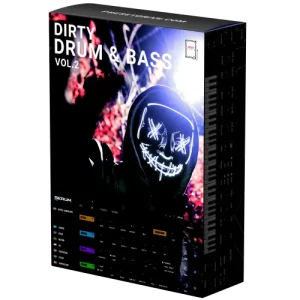
Dirty Drum & Bass Vol.2
Filthy bass presets for dubstep and riddim. Growls, wobbles, and screeches.
£29.99
Shop Now →Not sure yet? Grab our free taster pack first.


