
The Wobble Bass: A Foundation of Bass Music
The wobble bass is one of the most iconic sounds in electronic music. From the early UK dubstep of Rusko and Caspa to modern bass house and riddim, the wobble has evolved across genres but remains fundamentally the same: a bass sound with rhythmic filter or volume modulation that creates a pulsing, wobbling effect.
In this guide, we break down exactly how to create wobble basses in Serum, from basic wobbles to advanced techniques used in professional productions.
Basic Wobble Bass in Serum
Step 1: The Oscillator
Load Serum and start with a saw wave on Oscillator A. Set unison to 2-4 voices with light detune. This gives you a thick starting tone with enough harmonic content for the filter to work with. A pure sine wave will not wobble well because there are no upper harmonics for the filter to reveal and hide.
Step 2: The Filter
Enable Filter 1 and set it to a low-pass type (MG Low 24 is a classic choice). Set the cutoff to around 30-40% and resonance to 20-30%. The filter is what creates the wobble, so getting this right is crucial.
Step 3: The LFO
Assign LFO 1 to the filter cutoff. Set the LFO rate to sync with your project tempo. Start with 1/4 note rate for a steady, medium-speed wobble. Use a triangle or sine wave LFO shape for a smooth wobble, or a square wave for a choppy, on-off style.
The LFO amount (modulation depth) controls how far the filter opens and closes. Start at 50% and adjust. More depth means a more dramatic wobble. Less depth means subtler movement.
Advanced Wobble Techniques
Changing the Wobble Speed
The best wobble basses change speed throughout the track. Automate the LFO rate to create dynamic wobbles: slow and groovy during verses, fast and aggressive during drops, and half-speed during breakdowns.
Common wobble rates: 1/1 note (very slow), 1/2 note (slow), 1/4 note (medium), 1/8 note (fast), 1/16 note (very fast, almost a buzz). Switching between these rates within a single drop creates exciting variation.
Multi-Parameter Wobble
Do not just wobble the filter. Assign the same LFO to multiple parameters simultaneously: filter cutoff, wavetable position, distortion drive, and reverb send level. When multiple parameters move together, the wobble becomes much more complex and interesting.
Use different LFO amounts for each parameter. The filter might wobble dramatically while the wavetable position shifts subtly. This creates depth without the movement being too obvious or mechanical.
Custom LFO Shapes
Serum lets you draw custom LFO shapes. Instead of using standard sine or triangle waves, draw your own shape that matches the exact rhythm and feel you want. You can create shapes with sharp attacks and slow decays, stuttering patterns, or any combination.
Right-click the LFO display in Serum and select “Create from MIDI” to generate an LFO shape from a MIDI pattern. This lets you create rhythmically complex wobbles that lock perfectly to your drum pattern.
Wobble with Envelopes
Instead of a repeating LFO, use Serum envelopes for one-shot wobble effects. Assign Env 2 to the filter cutoff with a fast attack and medium decay. Each time you trigger a note, the filter opens and closes once, creating a wobble that responds to your playing rather than running continuously.
Genre-Specific Wobble Tips
Dubstep Wobble
Dubstep wobbles use heavy distortion and deeper modulation. Push the LFO depth higher and add distortion before and after the filter. Use lower pitches (around C1-C2) and mono voicing for maximum weight.
Bass House Wobble
Bass house wobbles are groovier and more musical. Use moderate distortion and keep the wobble rate locked to the four-on-the-floor groove. 1/4 or 1/8 note rates work best. The wobble should enhance the groove, not overwhelm it.
UK Bass Wobble
UK bass wobbles have a smoother, more rubbery quality. Use lower resonance settings and softer LFO shapes (sine or triangle). Add a touch of chorus or short delay for width. The wobble should feel bouncy and fun rather than aggressive.
DnB Wobble
In drum and bass, wobble basses need to move fast enough to keep up with 170+ BPM tempos. Use 1/8 or 1/16 note rates. Keep the bass tight and punchy rather than wide and sustained. Jump-up DnB uses the most wobble of any DnB subgenre.
Wobble-Ready Preset Packs
Our Serum preset packs include wobble-ready bass patches with macro-mapped wobble controls. Twist the macros to adjust wobble speed, depth, and character in real-time.
Dirty Bass House Vol.1 and Vol.2 feature bass house wobbles. Dirty DnB packs include jump-up wobble patches. UK Bass packs have smooth, bouncy wobbles. Get them all in the Dirty Bass Master Bundle.
PHP: 2026-03-08 20:24:24 [notice X 0][/var/www/presetdrive/wp-content/plugins/elementor-pro/modules/forms/submissions/actions/save-to-database.php::193] {closure:ElementorPro\Modules\Forms\Submissions\Actions\Save_To_Database::__construct():193}(): Implicitly marking parameter $exception as nullable is deprecated, the explicit nullable type must be used instead [array (
‘trace’ => ‘
#0: Elementor\Core\Logger\Manager -> shutdown()
‘,
)]
Related Guides
Ready to level up your sound?
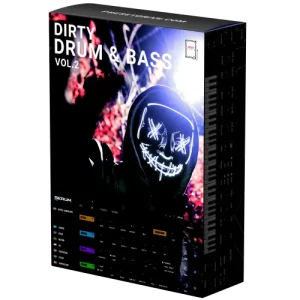
Dirty Drum & Bass Vol.2
Filthy bass presets for dubstep and riddim. Growls, wobbles, and screeches.
£29.99
Shop Now →Not sure yet? Grab our free taster pack first.


