What Defines Jump Up DnB Bass?
Jump up drum and bass is all about energy, simplicity, and dancefloor impact. The bass sounds in jump up are typically punchy, in-your-face, and rhythmically tight. Unlike the complex sound design of neurofunk or the smooth textures of liquid, jump up bass is meant to make people move. It is direct, aggressive, and unapologetically fun.
The genre gets its name because the bass drops literally make people jump. That means the sounds need to hit hard, sit right in the sweet spot of the frequency spectrum, and have enough rhythmic drive to lock in with the fast drum patterns. Serum is perfect for creating these sounds because you need precise control over harmonics, filtering, and modulation.
Creating a Classic Jump Up Reese Bass
The reese bass is the backbone of jump up DnB. It is built from detuned saw waves that create a thick, moving texture. In Serum, load a saw wave into both OSC A and OSC B. Detune them against each other by a few cents in opposite directions. OSC A at +7 cents and OSC B at -7 cents is a solid starting point.
Add 2-4 unison voices on each oscillator with a small detune spread. This thickens the sound further and adds width. Keep the unison count moderate because you need this sound to stay tight and punchy rather than washy and wide. Jump up reese bass should feel focused and aggressive.
Filtering the Reese
Apply a low-pass filter and automate the cutoff with an LFO or envelope. For the classic opening and closing reese movement, use an LFO synced to 1/2 or 1/4 notes. The filter movement gives the reese its characteristic breathing quality that ebbs and flows with the rhythm.
Set the filter resonance to around 20-30%. Too much resonance makes the reese sound thin and nasal. Too little makes it sound flat and lifeless. The sweet spot gives the filter sweep some presence without overpowering the fundamental thickness of the sound.
Building a Foghorn Bass
The foghorn is a classic jump up sound. It is a big, brassy, aggressive tone that cuts through everything. Think of it like a distorted horn blast. Start with a square wave in OSC A. The square wave has strong odd harmonics that give it that hollow, brassy quality.
Add some pulse width modulation by using a wavetable that morphs between square and pulse shapes, or use the Sync warp mode with moderate settings. This adds movement and prevents the sound from being too static.
Processing the Foghorn
Heavy distortion is key. In the Serum FX chain, add distortion with the drive cranked to 50-70%. The “Tube” type works well for a warm, brassy distortion. Follow it with a band-pass filter centred around 300-800Hz to focus the sound in the mid-range where it cuts through the mix.
Add a short, tight reverb to give the foghorn some space and depth. Keep the decay under 500ms and high-pass the reverb at 300Hz so it does not muddy up the low end. The reverb should add a sense of size without making the sound washy.
Tear-Out Bass Techniques
Tear-out is the heavier side of jump up, pushing into more aggressive territory. These sounds use more extreme processing and often feature rapid modulation for a chaotic, energetic feel.
Granular-Style Effects
Use very fast LFO rates (1/16 or 1/32 notes) on the filter cutoff for a stuttering, glitchy effect. Combine this with wavetable position modulation at a different rate. The two modulations interact to create complex, unpredictable textures that feel chaotic but stay rhythmically locked to the beat.
Layered Distortion
Stack multiple distortion types for maximum aggression. Start with a soft saturation to warm the harmonics, then add a hard clip for edge, then finish with a bit crusher for digital grit. Each stage adds a different type of harmonic content, resulting in a layered, complex distortion that sounds massive.
Programming Jump Up Bass Patterns
Jump up DnB typically runs at 170-180 BPM. The bass patterns need to be tight and punchy at these tempos. Use short note lengths (1/8 or 1/16 notes) with gaps between them. The space between notes is just as important as the notes themselves because it creates the bouncy, energetic rhythm.
A classic pattern starts with the bass hitting on beat 1, resting on beat 2 (where the snare hits), and then playing a syncopated rhythm through beats 3 and 4. Vary the pattern every 4 or 8 bars to keep things interesting. Pitch your notes strategically, with occasional drops to lower octaves for impact at key moments.
Velocity variation adds human feel to your patterns. Program some notes slightly softer for ghost notes that add subtle rhythmic complexity. Alternate between your main bass sounds (reese, foghorn, tear-out) across different sections to keep the track dynamic and engaging.
Mixing Jump Up Bass
Jump up bass needs to hit hard but leave room for the drums. Sidechain compression against the kick is essential. Use a fast attack and medium release so the bass ducks out of the way of the kick but recovers quickly. The drums should always punch through clearly on top of the bass.
Layer a clean sub underneath your main bass sound. High-pass the main bass at around 80-100Hz and let the sub handle everything below. This gives you a powerful, consistent low end regardless of what is happening with the mid-range bass textures above.
Start Making Jump Up Bass
Jump up DnB is one of the most fun genres to produce because the sounds are bold, the energy is high, and the dancefloor response is immediate. With Serum and the techniques above, you have everything you need to start building your own jump up bass arsenal.
Get some professional bass sounds to kickstart your productions. Download the Serum Taster Pack at no cost, then browse the Preset Drive shop for full preset packs designed for DnB and bass music production.
PHP: 2026-03-15 12:33:29 [notice X 0][/var/www/presetdrive/wp-content/plugins/elementor-pro/modules/forms/submissions/actions/save-to-database.php::193] {closure:ElementorPro\Modules\Forms\Submissions\Actions\Save_To_Database::__construct():193}(): Implicitly marking parameter $exception as nullable is deprecated, the explicit nullable type must be used instead [array (
‘trace’ => ‘
#0: Elementor\Core\Logger\Manager -> shutdown()
‘,
)]
For a complete overview of jump up bass sounds and preset recommendations, see our Jump Up Bass Serum Presets guide.
Get sounds that already sit in the mix
Skip the sound design. Our Serum packs and one-shots load straight into your DAW so you can finish a track tonight.
Ready to level up your sound?
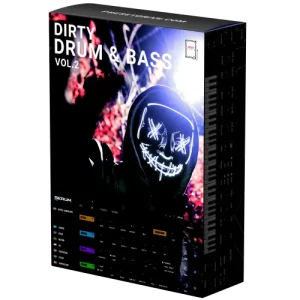
Dirty Drum & Bass Vol.2
Professional DnB presets for Serum. Reeses, neuro basses, subs, and more.
£29.99
Shop Now →New here? Start with our one-shots pack first.

