Getting Started with Dubstep Sound Design
Dubstep is one of the most sound design-intensive genres in electronic music. The basses, the growls, the screeches, and the impacts are all custom-built sounds that define the character of each track. If you want to make dubstep that stands out, you need to learn how to design these sounds yourself.
Serum is the go-to synth for dubstep sound design. Its visual interface, powerful modulation system, and excellent built-in effects make it the perfect tool for beginners learning the craft. This guide will walk you through the fundamental techniques you need to start creating your own dubstep sounds.
Your First Dubstep Wobble Bass
The wobble bass is the most iconic dubstep sound and a great place to start learning.
Step-by-Step Setup
Load a saw wave into Oscillator A. Set the unison to 4 voices with moderate detune for thickness. Enable a low-pass filter and set the cutoff to around 500 Hz with moderate resonance.
Now assign LFO 1 to the filter cutoff. Set the LFO rate to 1/4 note (synced to tempo) and increase the modulation depth until you hear the filter opening and closing rhythmically. This is your basic wobble.
Experiment with different LFO rates. 1/2 note gives a slower, heavier wobble. 1/8 note gives a faster, more aggressive rhythm. You can also try dotted and triplet rates for different grooves.
Adding Character
Add distortion in the FX chain to give the wobble more aggression. Tube or Hard Clip modes work well. Add a touch of reverb for space and a compressor to even out the dynamics.
Try changing the LFO shape from a triangle to something more complex. Custom-drawn LFO shapes let you create unique rhythmic patterns that give your wobble its own personality.
Designing Growl and Scream Basses
Growl basses are created through a combination of FM synthesis, wavetable modulation, and heavy processing.
Start with a complex wavetable on Osc A. Something with lots of harmonic content and variation across the wavetable positions. Assign an LFO to the wavetable position to create movement.
Enable FM from Osc B. Load a different wavetable on Osc B and set the FM amount to around 30-50 percent. Assign another LFO or envelope to the FM amount for evolving harmonic content.
Layer distortion effects. Try using two distortion stages in different positions in the effects chain. The first distortion creates the base grit, the second adds more aggressive harmonics on top.
Creating Impact Sounds and Risers
Impacts
Dubstep impacts are essential for marking transitions and drop entries. To create a basic impact, use a noise oscillator with a fast volume envelope (instant attack, short decay, no sustain). Layer this with a low sine wave that has a pitch envelope dropping quickly from a higher frequency. The combination of the noise burst and the descending pitch creates a satisfying impact.
Risers
Risers build tension before a drop. Start with a noise oscillator running through a high-pass filter. Automate the filter cutoff from low to high over 8 to 16 bars. Add a pitch-rising sine wave underneath for extra energy. Reverb with a long tail adds spaciousness to the riser.
For more intense risers, layer multiple elements. A rising pitch synth, a noise sweep, a drum roll, and a reverse cymbal all combined create the kind of epic build-ups that make dubstep drops hit hard.
Resampling and Sound Layering
Resampling is a core dubstep production technique. The process is simple. Design a sound, bounce it to audio, then process and manipulate the audio further. Import it back into Serum as a wavetable for even more possibilities.
This iterative process is how producers create sounds that seem impossibly complex. Each round of resampling adds new character and texture. You might start with a simple FM bass, distort it, resample it, chop it up, process each piece differently, then layer the results back together.
Layering is equally important. Most dubstep bass sounds you hear in professional tracks are actually multiple layers working together. A sub layer for the low end, a mid layer for the growl, and a top layer for presence and bite. Each layer can be designed and processed independently, then combined in your mixer.
Keep Practising and Experimenting
Dubstep sound design is a skill that takes time to develop. Do not be discouraged if your first attempts do not sound like your favourite artists. Every professional producer started exactly where you are now.
Set aside time specifically for sound design sessions, separate from your track-making sessions. Focus purely on creating and saving presets without the pressure of finishing a full track. Over time, you will build a library of your own sounds.
To accelerate your learning, study professional presets to understand how they are built. The Preset Drive shop has dubstep-focused Serum preset packs you can load up, reverse-engineer, and learn from. Start with the free Serum taster pack to get some quality presets to study and use in your productions right away.
Ready to level up your sound?
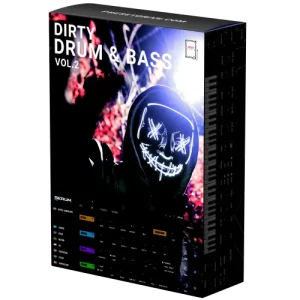
Dirty Drum & Bass Vol.2
Filthy bass presets for dubstep and riddim. Growls, wobbles, and screeches.
£29.99
Shop Now →Not sure yet? Grab our free taster pack first.

