How to Make Dubstep Bass in Serum – Step by Step Guide
Dubstep bass is some of the most aggressive, complex, and technically demanding sound design in all of electronic music. From the classic wobbles of early dubstep to the face-melting growls of modern riddim and tearout, Xfer Serum has become the weapon of choice for dubstep producers worldwide.
This guide walks you through creating five essential dubstep bass sounds in Serum. Each section includes a step-by-step patch walkthrough so you can follow along and build the sounds yourself. We will cover the classic wobble bass, riddim bass, tearout bass, yoy bass, and heavy growls. By the end, you will have a solid foundation in dubstep sound design.
Classic Dubstep Wobble Bass
The wobble bass is where dubstep began. Producers like Skream, Benga, and Caspa built the genre on this sound. A wobble bass uses an LFO on the filter cutoff to create a rhythmic, pulsing movement. It sounds simple, but getting the details right is what separates a weak wobble from one that shakes the room.
Step-by-Step Wobble Patch
- Initialise Serum (right-click the preset name, select “Init Preset”).
- On OSC A, load the “Basic Shapes” wavetable. Set the WT Pos to a saw wave.
- Drop the Octave to -1 for a deeper tone.
- Add 2-4 voices of Unison with a small detune (around 0.10-0.15) for thickness.
- Turn on Filter 1. Set it to MG Low 24 (low-pass filter). Turn the Cutoff down to about 20%.
- Drag LFO 1 to the Filter Cutoff knob. Set the modulation depth so the cutoff sweeps from fully closed to about 70% open.
- On LFO 1, set the Rate to 1/4 (synced to tempo). Use a sine wave shape for a smooth wobble.
- Turn on the Sub oscillator with a sine wave for low-end weight.
- In the FX tab, add Distortion (Tube mode, drive around 30%) and a touch of Reverb (mix 10-15%, decay 30%).
- Play a sustained note and you should hear a classic wobble bass.
LFO Rate Automation for Classic Wobble
The real magic of the classic wobble comes from automating the LFO rate. In the early days of dubstep, producers like Caspa and Rusko would automate the wobble speed throughout the track to create tension and release.
Try these rate changes within a single 8-bar section:
- Start at 1/4 note rate for a slow, heavy wobble.
- Switch to 1/8 for double-speed energy.
- Drop to 1/2 for a massive, slow sweep.
- Hit 1/16 for rapid-fire wobbles before switching back to 1/4.
This rate automation gives the wobble a live, performative quality. Map the LFO rate to a macro so you can automate it easily from your DAW.
Riddim Bass
Riddim dubstep strips everything back to the essentials. The bass is heavy, minimal, and repetitive. Producers like Virtual Riot, Infekt, and Svdden Death have pushed riddim into a massive subgenre with its own distinct sound.
Riddim basses tend to be shorter, choppier, and more percussive than classic wobbles. They hit hard on the downbeat and leave space for the drums to breathe.
Step-by-Step Riddim Patch
- Initialise Serum.
- On OSC A, load “Analog_BD_Saw” wavetable. Set WT Pos to about 50%.
- Set Octave to -1. Add 2 voices of Unison with light detune.
- Turn on OSC B. Load “Digital_Carbon” or a similar complex wavetable. Set Octave to 0. Set WT Pos to about 30%.
- Turn on Filter 1 (MG Low 18). Set Cutoff to about 35%. Turn Resonance up to about 40% for that aggressive, squelchy quality.
- Assign Envelope 2 to the Filter Cutoff with a medium modulation depth. Set Envelope 2 with zero Attack, medium Decay (around 300ms), zero Sustain, and short Release. This creates a percussive, decaying filter sweep on each note.
- In the FX tab, add Distortion (Hard Clip mode, drive around 40-50%). Add Compressor (threshold around -15 dB, ratio 4:1).
- Turn on the Sub oscillator (sine wave) for low-end foundation.
- Set the Amp envelope to zero Attack, medium Decay (400ms), medium Sustain (60%), and short Release. This gives each note a punchy, percussive quality.
- Play staccato notes and you should hear a heavy, choppy riddim bass.
Making Riddim Bass Hit Harder
Riddim is all about impact. Here are some techniques to make your riddim patches hit harder:
- Layer a pitch envelope on OSC A. A fast downward pitch sweep (from +12 semitones to 0 over about 30ms) adds a massive transient click to each note.
- Use the Noise oscillator with a short burst of white noise at the start of each note for extra attack.
- Add OTT (multiband compression) after Serum for that hyper-compressed modern sound.
- Automate the WT Pos on every other bar to create subtle tonal variations.
Tearout Bass
Tearout dubstep is chaotic, aggressive, and relentless. Think Barely Alive, Phiso, and Marauda. The basses in tearout are often complex, layered, and processed beyond recognition. They use extreme distortion, rapid modulation, and unconventional wavetable choices.
Step-by-Step Tearout Patch
- Initialise Serum.
- On OSC A, load “Spectral_Buzzy” or any wavetable with lots of harmonic content. Set WT Pos to about 60%.
- Set Octave to -1. Enable FM from B mode on OSC A. This lets OSC B frequency-modulate OSC A for metallic, harsh tones.
- On OSC B, load “Analog_Morph” wavetable. Set the WT Pos to about 40%. Set Octave to 0.
- Assign LFO 1 to OSC A WT Pos. Set the LFO to 1/8 note rate with a saw down shape. Set modulation depth to about 50%.
- Assign LFO 2 to OSC B WT Pos. Set the LFO to 1/16 note rate with a square shape. Set modulation depth to about 40%.
- Turn on Filter 1 (Notch filter). Set Cutch to about 50%. Assign LFO 3 to the Filter Cutoff at 1/4 rate with a triangle shape. This creates sweeping, phaser-like movement.
- In the FX tab, add Distortion (Sine Fold mode, drive at 60%). Add a second Distortion (Dirty mode at 30%). Add Compressor.
- Add Hyper/Dimension in the FX for stereo width.
- Experiment with different wavetable positions and LFO rates until you find a chaotic, aggressive sound.
Tearout sound design is about experimentation. Do not be afraid to push parameters to extreme settings. Some of the best tearout sounds come from happy accidents when you push Serum further than you thought you should.
Yoy Bass
The yoy bass (sometimes spelled “yoi”) is a signature dubstep sound characterised by a rapid, vowel-like opening and closing effect. It sounds like the bass is saying “yoy yoy yoy.” This is achieved through formant-style filter modulation.
Step-by-Step Yoy Patch
- Initialise Serum.
- On OSC A, load a wavetable with vocal or formant characteristics. Try “Vowel_Formants” or “Analog_Fattie”. Set WT Pos to about 30%.
- Set Octave to -1. Add 2 Unison voices with light detune.
- Turn on Filter 1. Set it to a low-pass filter (MG Low 24). Set Cutoff to about 25%. Set Resonance to about 50%.
- Assign LFO 1 to the Filter Cutoff. Set LFO rate to 1/8 or 1/16. Use a sine wave shape with a high modulation depth so the filter sweeps from closed to wide open.
- Here is the key step. Assign LFO 1 to the WT Pos on OSC A as well, but with a lower modulation depth (around 20-30%). This means the filter and the wavetable position move together, creating the characteristic vowel-like “yoy” sound.
- In the FX tab, add Distortion (Tube mode, drive 40%). Add a touch of Reverb (mix 10%, decay 20%) for space.
- Turn on the Sub oscillator (sine) for low-end weight.
- Play a sustained note and adjust the LFO rate until you get that rhythmic “yoy yoy yoy” effect.
Getting the Right Vowel Character
The “yoy” character comes from the resonance setting and the wavetable choice. Higher resonance creates a more pronounced, vocal quality. Experiment with different wavetables that have formant-like characteristics. Some producers create custom wavetables from actual vocal recordings to get the most realistic vowel sounds.
Try automating the resonance alongside the LFO for even more expressive movement. A slight increase in resonance at the peak of each LFO cycle makes the “yoy” sound more dramatic.
Heavy Growls
Growl basses are the trademark of producers like Excision, Zomboy, and Virtual Riot. These sounds use complex wavetable modulation, heavy processing, and FM synthesis to create aggressive, screaming, vocal-like basses that dominate the mix.
Step-by-Step Growl Patch
- Initialise Serum.
- On OSC A, load a complex, harmonically rich wavetable. “Spectral_Formants” or “Distortion_Growl” work well. Set WT Pos to about 40%.
- Enable FM from B on OSC A. Set the FM depth to about 30%.
- On OSC B, load “Analog_Morph” or a similar evolving wavetable. Set Octave to +1 relative to OSC A. This higher-pitched FM source creates metallic, screaming harmonics.
- Assign LFO 1 to OSC A WT Pos. Use a slow rate (1/2 note) with a triangle shape and high modulation depth. This creates a slowly evolving growl character.
- Assign LFO 2 to the FM depth on OSC A. Use a faster rate (1/8 note) with a sine shape. This creates rhythmic variations in the growl intensity.
- Turn on Filter 1 (MG Low 12). Set Cutoff to about 50%. Assign Envelope 2 to the Cutoff with medium depth. Set Envelope 2 with fast Attack, medium Decay, medium Sustain, short Release.
- In the FX tab, add Distortion (Sine Fold, drive 50%). Add a second Distortion (Downsample, drive 20%). Add Compressor. Add Hyper/Dimension for width.
- Play sustained notes in the C1-C2 range and tweak the wavetable positions and LFO depths until you hear aggressive, screaming growls.
Advanced Growl Techniques
- Macro mapping – Map the WT Pos of both oscillators, FM depth, filter cutoff, and distortion drive to macros. This lets you morph between drastically different growl characters in real time.
- Formant shifting – Use wavetables with vocal formants and automate the position to create sounds that seem to speak or scream.
- Resampling – Render your growl to audio, reimport it as a wavetable, and use it as a starting point for further processing. This layered approach creates incredibly complex sounds.
- Post-processing – Apply OTT, additional distortion, and EQ after Serum for maximum aggression.
Want to hear what professional dubstep bass presets sound like? Check out our bass one-shot samples for instant, drop-ready bass hits, or browse our preset bundles for complete sound design toolkits.
Modern Dubstep vs Classic Dubstep Sound Design
The difference between classic and modern dubstep sound design is enormous. Understanding both styles helps you create sounds that fit whichever direction you want to take your music.
Classic Dubstep (2006-2012)
Classic dubstep from the Skream, Benga, and Digital Mystikz era focused on space, sub bass, and atmosphere. The sound design was comparatively simple. Single oscillator wobbles with minimal processing. The emphasis was on the weight of the sub bass and the space between elements.
Key characteristics of classic dubstep sound design:
- Simple LFO-driven wobble basses using basic waveforms (saw, square).
- Minimal distortion and processing. Clean, deep sounds.
- Heavy emphasis on sub bass (usually a clean sine wave).
- Reverb and delay used generously to create dark, spacious atmospheres.
- Slower wobble rates. 1/4 and 1/2 note LFO speeds were common.
- Garage and dub reggae influences in the drum patterns and arrangement.
Modern Dubstep (2016-Present)
Modern dubstep, led by producers like Excision, Virtual Riot, Barely Alive, and Zomboy, is all about complexity, aggression, and technical sound design. Every bass sound is processed through multiple stages of distortion, filtering, and modulation.
Key characteristics of modern dubstep sound design:
- Complex FM synthesis with multiple oscillators interacting.
- Heavy distortion. Often multiple distortion stages stacked.
- Multiband processing (OTT) applied to almost everything.
- Rapid modulation with multiple LFOs running at different rates.
- Custom wavetables created through resampling and wavetable editing.
- Macro-mapped patches that allow real-time morphing between sounds.
- Shorter, choppier bass patterns rather than long sustained wobbles.
- Emphasis on mid-range aggression rather than sub bass weight.
Bridging Both Styles
Many successful producers blend elements of both approaches. A track might have a heavy, modern growl in the drop but use a classic-style wobble in the breakdown. Understanding both styles gives you a much wider palette to work with.
Essential Processing Chain for Dubstep Bass
Regardless of which style of dubstep bass you are creating, the processing chain after Serum is crucial. Here is a recommended chain:
- EQ (pre-distortion) – Remove unnecessary low frequencies if you are layering with a separate sub bass. Cut below 80-100 Hz.
- Distortion/Saturation – Add harmonic content and aggression. Experiment with different types.
- OTT/Multiband Compression – Tames dynamics and brings out detail across the frequency spectrum. Use the dry/wet control to blend to taste.
- EQ (post-distortion) – Shape the final tone. Cut any harsh resonances, boost the areas you want to emphasise.
- Limiter – Catch any peaks from the processing chain. Set the ceiling at -1 dB.
Always process your mid-range bass and sub bass separately. Most dubstep producers split their bass into a sub layer (clean sine, no processing) and a mid layer (all the growls, wobbles, and textures). This keeps the low end clean while letting you go wild with processing on the mids.
Reference Tracks to Study
Studying reference tracks is essential for developing your dubstep sound design skills. Here are some must-study tracks for each bass type covered in this guide:
- Classic Wobble – Caspa and Rusko – “Cockney Thug”, Skream – “Midnight Request Line”
- Riddim – Virtual Riot – “Preset Junkies”, Infekt – “Raptor”
- Tearout – Barely Alive – “Cyber Bully”, Phiso – “Jotaro”
- Yoy – Excision – “Vault”, Dion Timmer – various releases
- Heavy Growls – Zomboy – “Like A Bitch”, Virtual Riot – “Energy Drink”
Load these tracks into your DAW and use a spectrum analyser to study the frequency content of each bass sound. Pay attention to how much sub bass versus mid-range content each sound has, and how the processing changes between sections.
Next Steps
Dubstep bass sound design in Serum is a lifelong learning process. The patches in this guide give you a solid foundation, but the real magic happens when you start experimenting on your own. Combine techniques from different bass types. Try unusual wavetables. Push distortion harder than you think you should. The best dubstep sounds often come from pushing Serum to its absolute limits.
To speed up your production workflow, explore our sample packs and bass one-shots designed specifically for dubstep and heavy bass music. Having professional sounds ready to load means you can spend more time arranging and mixing instead of starting every bass from scratch.
For complete production toolkits with basses, leads, pads, and FX all included, check out our preset bundles for Serum. Every preset is macro-mapped and ready to tweak to fit your track.
Related Preset Packs
Looking for professional bass music presets? Check out these Serum preset packs:
Ready to level up your sound?
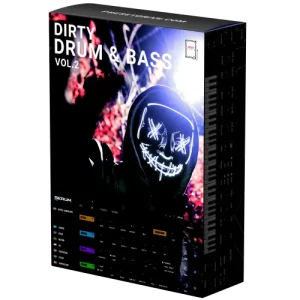
Dirty Drum & Bass Vol.2
Filthy bass presets for dubstep and riddim. Growls, wobbles, and screeches.
£29.99
Shop Now →Not sure yet? Grab our free taster pack first.


