Getting that heavy, rolling bass right is what separates a decent DnB track from one that makes the whole room move. Drum and bass sound design has evolved massively over the years, but the fundamentals of creating powerful low-end remain the same. Whether you are making liquid, neuro, jump up, or minimal, the bass is the backbone of everything.
Understanding the DnB Bass Frequency Range
In drum and bass, your bass typically occupies two key frequency areas:
- Sub bass (30-80 Hz): This is the weight. The part you feel in your chest on a big system. It needs to be clean, consistent, and in mono.
- Mid bass (80-500 Hz): This is where the character lives. The growl, the grit, the movement. This is where most of your sound design effort should go.
The trick is keeping these two areas working together without fighting each other. Many producers make the mistake of trying to get all their weight and all their character from a single sound. That rarely works well.
The Sub Bass Layer
Your sub bass should be simple. A clean sine wave or a slightly saturated sine is all you need. Here is the approach:
- Start with a sine wave oscillator
- Add very light saturation or soft clipping to give it some harmonics (this helps it translate on smaller speakers)
- Keep it in mono – no stereo width on the sub
- Use a tight envelope with a fast attack so it hits immediately
- High-cut everything above 100-120 Hz with a steep filter
Some producers use a dedicated sub bass plugin, but Serum handles this perfectly well. The key is keeping it separate from your mid bass processing.
Mid Bass Sound Design
This is where it gets creative. The mid bass is what gives your DnB track its identity. Here are the main approaches by subgenre:
Reese Bass (Liquid/Classic DnB)
The Reese bass has been a staple of DnB since the 90s. To create one in Serum:
- Use two slightly detuned saw waves
- Add unison with 2-4 voices and light detune
- Run through a low pass filter with moderate resonance
- Automate the filter cutoff for movement
- Add subtle chorus or phaser for width
The beauty of a Reese is in the modulation. Even small filter movements create that swirling, evolving character that makes Reese basses so iconic.
Neuro Bass (Neurofunk)
Neuro basses are all about complex, metallic, processed sounds. The approach:
- Start with a complex wavetable, not basic shapes
- Use FM synthesis between oscillators for metallic harmonics
- Heavy distortion and waveshaping
- Automate wavetable position for tonal movement
- Layer multiple processed sounds and resample
Neurofunk bass design often involves resampling. Create a sound, bounce it to audio, load it back into Serum as a wavetable, and process it again. Each pass adds complexity.
Jump Up Bass
Jump up basses tend to be simpler but more aggressive:
- Square or saw wave foundation
- Heavy distortion through Serum’s built-in effects
- Tight low pass filter with envelope modulation
- Short, punchy notes rather than sustained sounds
- Lots of mid-range presence around 200-400 Hz
Processing Techniques That Make the Difference
Parallel Distortion
Instead of distorting your entire bass signal, blend a heavily distorted version with the clean original. This gives you aggression without losing the clean low-end weight. In your DAW, duplicate your bass track, process one copy with heavy distortion, high-pass it around 150 Hz, and blend to taste.
Multiband Processing
Use multiband compression or multiband distortion to treat different frequency ranges independently. Compress the sub to keep it consistent, add grit to the mids, and keep the highs open for detail. Serum’s built-in multiband compressor is actually decent for this.
Sidechain to the Kick
Sidechaining your bass to your kick drum is essential in DnB. It creates space for the kick to punch through and adds that pumping energy to the track. Use a fast attack and medium release. The sidechain should be subtle but noticeable.
Using Presets as Starting Points
If you are struggling with DnB bass sound design, studying well-made presets is one of the fastest ways to learn. Load up a preset, examine how it is built, then modify it to create something new.
Our DnB-focused Serum preset packs include a range of bass types from deep Reese basses to aggressive neuro growls. Each preset has mapped macros so you can shape the sound to fit your track without diving into the synth engine every time.
Start with the free taster pack to see the quality, or grab a full pack with code NIGHTOWL40 for 40% off at www.presetdrive.com.
The most important thing with drum and bass sound design is experimentation. These techniques give you a solid foundation, but the best sounds often come from happy accidents. Keep experimenting, keep saving your discoveries, and keep finishing tracks.
PHP: 2026-03-15 12:34:25 [notice X 0][/var/www/presetdrive/wp-content/plugins/elementor-pro/modules/forms/submissions/actions/save-to-database.php::193] {closure:ElementorPro\Modules\Forms\Submissions\Actions\Save_To_Database::__construct():193}(): Implicitly marking parameter $exception as nullable is deprecated, the explicit nullable type must be used instead [array (
‘trace’ => ‘
#0: Elementor\Core\Logger\Manager -> shutdown()
‘,
)]
For a complete overview of dirty bass sounds and preset recommendations, see our Dirty Bass Serum Presets guide.
Ready to level up your sound?
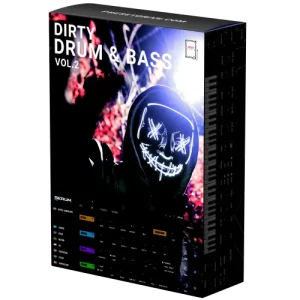
Dirty Drum & Bass Vol.2
Professional DnB presets for Serum. Reeses, neuro basses, subs, and more.
£29.99
Shop Now →Not sure yet? Grab our free taster pack first.

