Why Mixing and Mastering Matter in Drum and Bass
A great mix is the difference between a track that sounds like a bedroom demo and one that works on a club system. Drum and Bass is particularly demanding because it combines extreme low frequencies with fast, detailed percussion at high tempos. Getting the balance right requires careful attention to frequency management, dynamics and stereo placement.
This guide covers the essential mixing and mastering techniques specific to Drum and Bass production.
Preparing Your Mix
Gain Staging
Before you start mixing, set every channel to peak around -6 to -12 dB. This creates headroom on your master bus and prevents digital clipping. Use your DAW channel faders or a gain plugin at the top of each chain. Do not rely on the master fader to fix an overloaded mix.
Organisation
Colour code and label every track. Group related elements: all drums to a drum bus, all bass layers to a bass bus, melodic elements to a synth bus, and FX to an FX bus. This makes the mix manageable and lets you apply group processing efficiently.
Reference Tracks
Import 2-3 professional DNB tracks into your session at matched loudness. A/B your mix against them regularly. Focus on comparing the low end weight, drum punch, stereo width and overall tonal balance. This keeps your mix grounded in reality rather than drifting off course.
Mixing the Low End
Sub Bass Treatment
The sub bass needs to be clean, controlled and mono. Apply a low-pass filter at 100-150 Hz to remove any unnecessary harmonics. Use gentle compression (2:1-3:1 ratio) with a medium attack to keep the level consistent. Follow with a limiter set to catch peaks no more than 2-3 dB above the average level.
Kick and Sub Relationship
The kick and sub bass must not fight for the same space. Use sidechain compression on the sub triggered by the kick with a fast attack and medium release (50-100ms). This creates a momentary gap for the kick to punch through. Alternatively, use volume automation or a transient shaping plugin to duck the sub when the kick hits.
Mid Bass EQ
High-pass filter your mid-range bass at 80-100 Hz with a steep slope (24 dB/oct or steeper). This prevents low-frequency build-up between your sub and mid layers. Cut any muddy frequencies around 200-400 Hz if they clash with the kick body. Boost sparingly around 1-3 kHz for presence and aggression.
Mixing Drums
Kick Processing
EQ the kick to complement the sub bass. If your sub handles 20-60 Hz, let the kick focus on 60-100 Hz for body and 2-5 kHz for click and presence. Cut around 200-400 Hz to reduce boxiness. Compress with a fast attack to control peaks, or a slow attack to emphasise the transient punch.
Snare Processing
The snare drives the energy in DNB. EQ to emphasise body around 200-300 Hz and presence around 2-5 kHz. Cut low frequencies below 100 Hz that clash with the bass. Compress with a medium attack and fast release to add punch. Add a short plate or room reverb (0.5-1 second) for depth without washing out the transient.
Hi-Hat and Cymbal Processing
High-pass filter hi-hats at 300-500 Hz. They should live entirely in the upper frequency range. Use gentle compression to even out velocity variations if needed. Pan hi-hat patterns slightly off-centre for width. Add subtle stereo effects to cymbals and rides to create space in the high frequencies.
Drum Bus Processing
On the drum bus, apply parallel compression: send the drum bus to a return track with heavy compression (10:1 ratio, fast attack, fast release) and blend it in at low volume. This adds density and punch without crushing the dynamics of the original. Follow with gentle EQ to shape the overall drum tone.
Managing Stereo Width
The Mono Zone
Everything below 150-200 Hz must be mono. Use a stereo imaging plugin or mid/side EQ to collapse the low frequencies to the centre. This ensures your bass translates on mono club systems and does not lose power when summed.
Width Placement
Build your mix from the centre outward. Kick, sub bass and snare body sit dead centre. Mid bass and main vocals go just off-centre. Hi-hats, pads, atmospheric FX and background elements spread wider. This creates a focused, powerful centre with a spacious surround.
Checking in Mono
Toggle your master to mono regularly while mixing. If elements disappear or the bass loses weight, you have phase issues between your stereo channels. Fix these before they cause problems on club systems that sum to mono.
Using EQ Effectively
Subtractive First
Always cut before you boost. If something sounds muddy, cut the muddy frequencies rather than boosting the bright ones. Subtractive EQ sounds more natural and creates space for other elements. Save boosts for specific tonal shaping where you want a particular character.
High-Pass Everything
Put a high-pass filter on every track except kick and sub bass. Set the frequency based on the element: drums at 30-80 Hz, synths at 100-200 Hz, pads at 200-300 Hz, vocals at 200-400 Hz. This clears out low-frequency rubbish that accumulates and muddies the mix.
Surgical vs Musical EQ
Use narrow Q cuts to remove specific problem frequencies (resonances, room modes, harsh frequencies). Use wide Q boosts for musical shaping (adding warmth, air, presence). Narrow boosts sound unnatural and create peaks that can cause problems.
Compression Techniques for DNB
Sidechain Compression
Sidechain the entire bass bus to the kick for the pumping effect. Use a compressor with external sidechain input, fast attack (0-5ms) and medium release (50-150ms). The ratio can be 4:1-8:1 depending on how dramatic you want the ducking effect. In some sub-genres like liquid, lighter sidechaining sounds more natural.
Parallel Compression
Blend a heavily compressed version of your drums alongside the uncompressed version. This adds weight and sustain without destroying transients. Most DAWs support dry/wet control on compressors for easy parallel processing.
Multiband Compression
Use multiband compression on the master bus or bass bus to control different frequency ranges independently. Compress the low end (20-200 Hz) to keep the sub controlled, the mids (200-2000 Hz) for consistency, and leave the highs (2000+ Hz) relatively uncompressed for air and sparkle.
Mastering for Drum and Bass
Mastering Chain
A basic mastering chain for DNB:
- EQ: Gentle corrective EQ. High-pass at 25-30 Hz to remove sub-sonic energy. Small cuts or boosts to balance the overall tone
- Multiband Compression: Gentle gain reduction (1-3 dB) across 3-4 bands. Controls the dynamic range without squashing the mix
- Stereo Imaging: Narrow the low end, optionally widen the highs slightly
- Limiter: Set the ceiling at -0.3 to -1.0 dB true peak. Push the input gain until you get 3-6 dB of gain reduction maximum
Loudness Targets
For streaming platforms (Spotify, SoundCloud), aim for -14 LUFS integrated loudness. For club play and vinyl, you can push louder (-8 to -10 LUFS) but be careful not to over-limit and destroy the dynamics. DNB needs transient punch from the drums, so do not sacrifice dynamics for loudness.
Final Checks
Before exporting your master:
- Check in mono for phase issues
- Listen on multiple systems (headphones, monitors, phone, car)
- Compare loudness and tonal balance against reference tracks
- Check for clipping on the master output
- Export at 44.1 kHz / 16-bit WAV for distribution, or 48 kHz / 24-bit for maximum quality
Common Mixing Mistakes in DNB
- Too much low end: DNB needs controlled, tight bass, not boomy mud. High-pass aggressively and use sidechain compression
- Over-compression: Drum and Bass needs dynamics to feel energetic. If everything is squashed flat, the track loses impact
- Ignoring mono compatibility: Club systems often run in mono below 300 Hz. If your bass disappears in mono, the mix is broken
- Mixing too loud: Mix at low to moderate volume. Your ears make better decisions at lower levels. Turn up only for occasional checks
- Not using references: Without reference tracks, your mix will drift. Always compare against professional releases
Quality Sounds Make Mixing Easier
Starting with well-designed sounds makes mixing significantly easier. Professional presets are already EQ balanced, properly compressed and designed to sit well in a mix. This means less corrective processing and faster mixing sessions.
Preset Drive DNB presets for Serum are crafted to be mix-ready. Each preset sits well in the frequency spectrum and responds naturally to standard mixing techniques.
Conclusion
Mixing and mastering Drum and Bass is about controlling the extreme frequencies while maintaining energy and dynamics. Focus on clean low end separation, punchy drums and proper gain staging. Use sidechain compression, high-pass filtering and reference tracks to keep your mix competitive with professional releases.
Want mix-ready sounds for your DNB productions? Browse our professionally crafted preset packs designed specifically for Drum and Bass.
Related Preset Packs
Looking for professional bass music presets? Check out these Serum preset packs:
- Dirty Drum & Bass Vol.1
- Dirty Drum & Bass Vol.2
- 100x Dirty Bass One Shots
- Dirty Bass Master Bundle Vol. 1 & 2
Ready to level up your sound?
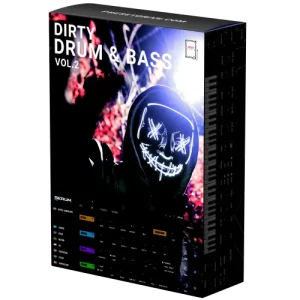
Dirty Drum & Bass Vol.2
Professional DnB presets for Serum. Reeses, neuro basses, subs, and more.
£29.99
Shop Now →Not sure yet? Grab our free taster pack first.


