Starting from Zero
Everyone starts somewhere. If you are reading this, you are interested in making bass music but might not know where to begin. That is perfectly normal. Bass music production has a learning curve, but it is not as steep as it might seem if you approach it the right way.
The most important thing to understand is that you do not need to learn everything before you start making music. You need a DAW, a synth, some basic knowledge, and the willingness to make terrible tracks for a while. Every producer you admire made terrible music when they started. The difference between those who succeed and those who quit is simply persistence.
This guide gives you a clear, practical path from complete beginner to making your first bass music tracks.
The Essential Gear and Software
What You Actually Need
You need a computer, a DAW (digital audio workstation), headphones or monitors, and a synth plugin. That is it. Everything else is optional. Do not fall into the trap of thinking you need expensive gear before you can start. Some incredible bass music has been made on laptops with headphones and free software.
For your DAW, Ableton Live, FL Studio, and Logic Pro are the most popular choices among bass music producers. Each has a free trial or a reasonably priced entry-level version. Pick one and learn it properly before considering switching.
For synths, Serum by Xfer Records is the industry standard for bass music. It costs a one-time fee or is available on a rent-to-own plan. If you cannot afford Serum yet, Vital by Matt Tytel is a free wavetable synth that is incredibly capable.
Headphones vs Monitors
Good headphones are more important than monitors when you are starting out. Studio monitors require acoustic treatment to be useful, which is an additional expense. A pair of quality closed-back headphones like the Audio-Technica ATH-M50x or Beyerdynamic DT 770 Pro will let you hear what you are doing accurately enough to learn.
Learning the Fundamentals
Understanding Synthesis
You do not need to become a synthesis expert overnight, but understanding the basics will serve you throughout your entire production journey. Learn what oscillators do (they generate the raw sound). Learn what filters do (they shape the frequency content). Learn what envelopes do (they control how parameters change over the duration of a note). Learn what LFOs do (they create repeating modulation).
These four concepts are the building blocks of every synth sound. Once you understand them, you can approach any synthesizer with confidence. Spend a few hours with Serum’s init patch, turning knobs and listening to what changes. Hands-on experimentation teaches you faster than reading alone.
Basic Music Theory
You do not need a music degree, but knowing a few basics helps enormously. Learn what keys and scales are. Understand the concept of chord progressions. Learn how bass notes relate to kick drums in terms of frequency and timing. Even this basic level of theory will prevent a lot of frustration and help you write better bass lines and melodies.
Making Your First Track
Start with Drums
Begin by programming a simple drum pattern in your chosen genre. If you are making DnB, program a basic two-step at 174 BPM. For dubstep, create a half-time pattern at 140 BPM. For bass house, set up a four-to-the-floor pattern at 128 BPM. Use sample packs for your drum sounds to start with. Focus on learning arrangement and rhythm rather than trying to synthesize drums from scratch.
Add Bass
Load a Serum preset (or design a simple bass sound) and write a bass line that complements your drums. Start with just a few notes. Bass music does not need complex melodies. Sometimes a single note or a two-note pattern is all you need for an effective bass line. Focus on the rhythm and how the bass interacts with the kick drum.
Build the Arrangement
Arrange your drum and bass elements into a basic structure with an intro, a drop, and an outro. Do not aim for perfection. Aim for completion. Finishing a bad track teaches you more than endlessly tweaking an unfinished idea.
Common Beginner Mistakes to Avoid
Do not spend all your time watching tutorials without making music. Do not compare your first tracks to professional releases. Do not buy loads of plugins and samples before learning what you already have. Do not quit after a month because your tracks do not sound like your favourite artists. Production takes time. Be patient with yourself.
Accelerate Your Learning with Presets
Quality presets are one of the fastest ways to learn sound design. When you load a professionally designed preset, you can study how it is built. Look at the oscillator settings, filter configuration, modulation routing, and effects chain. This teaches you techniques that would take months to discover on your own.
Browse the Preset Drive shop for beginner-friendly Serum preset packs. Each pack gives you production-ready sounds and a learning resource in one.
Start with our Free Serum Taster Pack to get some quality sounds into your DAW today. It is the perfect starting point for new producers.
Every producer started exactly where you are now. Grab some presets from the Preset Drive shop, open your DAW, and start making noise. Your journey begins today.
Ready to level up your sound?
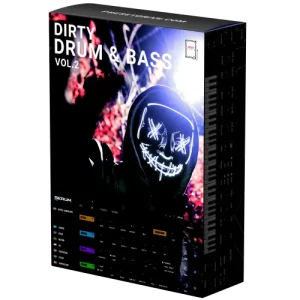
Dirty Drum & Bass Vol.2
Professional DnB presets for Serum. Reeses, neuro basses, subs, and more.
£29.99
Shop Now →Not sure yet? Grab our free taster pack first.


